
Phosphonates · Technical purchasing guide
Cloudy HEDP Make-Up Solution: Check Dilution Water Before Changing Grade
When HEDP make-up solution turns cloudy, first locate where the change begins: in the dilution water, during addition, after other ingredients enter, or during storage. Compare the water alone and the same product prepared with a documented reference water, keeping product basis, temperature, mixing and observation time consistent. A haze can reflect particles, entrained air, contamination or precipitation; appearance alone cannot identify calcium phosphonate or justify changing supplier. Check the tank, previous contents and sampling method, then identify persistent solids where necessary. Use the result to choose a water-treatment or preparation correction, a more representative trial, or a different documented grade. Keep affected material under the site's chemical-management procedure until its suitability for the feed system is resolved.
TL;DR
Treat cloudy HEDP dilution as a preparation problem to investigate before making a purchasing decision. Retain the original product, dilution-water and prepared-solution samples with their times and temperatures. Compare water blanks, reference-water preparations and actual-water preparations on the same stated chemical basis. Follow cloudiness over the intended holding period, then relate any solids to filtration, transfer and feed-system behavior. Correct water quality, contamination or an unsupported mixing sequence when those factors explain the change. Evaluate another grade only when the controlled comparison supports it. Share the preparation recipe, water analysis and observations with the supplier so the proposed sample and quotation address the actual problem.
Find the first cloudy point in the preparation path
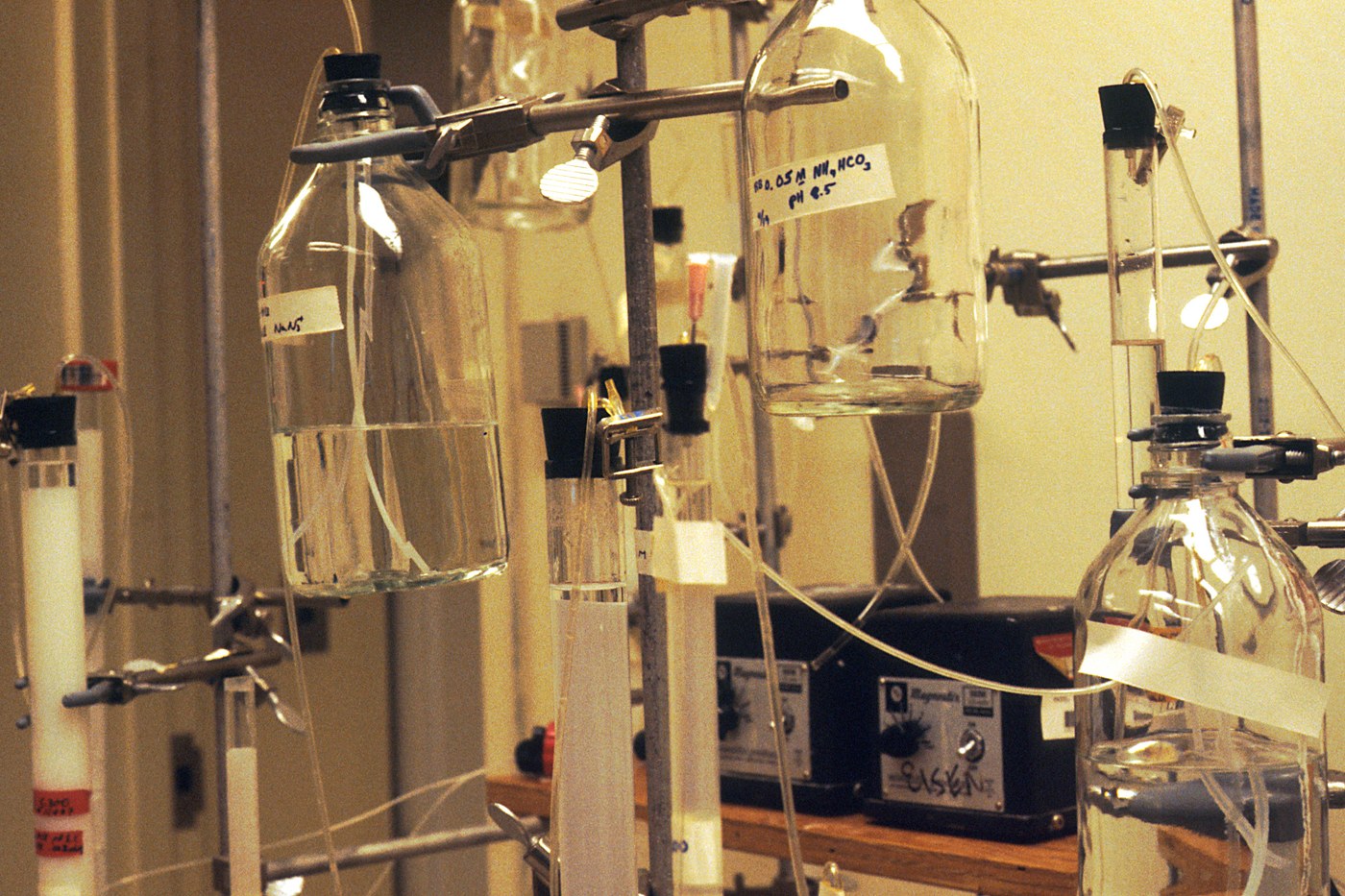
Draw a short path from the incoming container to the dilution-water supply, make-up vessel, transfer line, day tank and injection connection. Mark where each observation was made. A sample drawn from a stagnant bottom connection may contain material that is absent from a circulating tank sample. Conversely, a clear top sample may miss settled solids that later enter the pump. Record whether the preparation was freshly mixed, recirculating, standing or recently transferred.
Separate the supplied chemical from the prepared mixture. Check container identity, lot, appearance and storage history against the current offered-grade specification. Then record the water source, recipe basis, measuring equipment, order of additions, mixing method and other ingredients. The useful question is which change introduced the symptom. A new water source and a new chemical lot arriving together are two variables, even if the operator first noticed the new container.
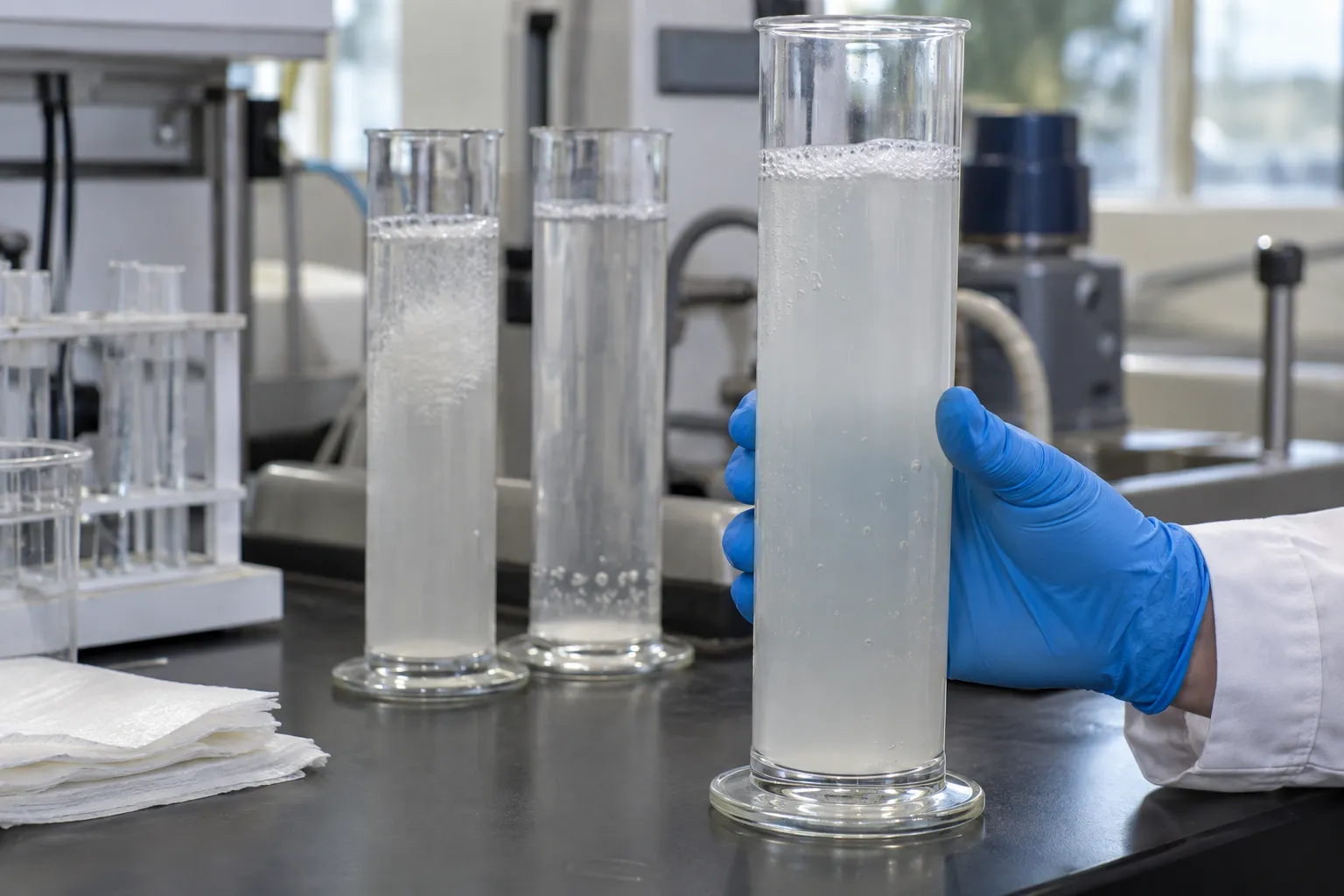
Take observations in clean, chemically appropriate containers using the site's approved sampling and handling procedure. Photographs under consistent lighting can preserve a useful appearance record, but a photograph is not a solids identification. Include a water blank and an unused container check. Bubbles from mixing, suspended rust and mineral precipitates require different follow-up; do not label every white haze as a defective phosphonate.
Keep a possible mechanism separate from a confirmed cause
Phosphonates interact with dissolved metals, so preparation water and local mixing conditions deserve attention. Lubrizol's published water-treatment polymer paper treats calcium-phosphonate precipitation and iron-oxide dispersion as separate laboratory evaluations. Its defined synthetic-water tests illustrate why calcium, pH, time and separation method belong in a comparison; those conditions are not a preparation recipe or an acceptance limit for an offered HEDP grade.
Check hardness, alkalinity, pH, conductivity, iron and visible solids in the actual dilution water. Add other ions or contamination measurements when the source and symptoms justify them. Conductivity can reveal a change in total ionic conditions, but it cannot identify the precipitate. Softened water also needs its own analysis: changing hardness does not by itself describe all dissolved ions, contamination or the storage vessel.
Inspect the preparation equipment for carryover from previous batches, cleaning residues, corroded fittings and accumulated deposits. Ask whether another concentrated ingredient entered before adequate dilution or whether an addition reached a poorly mixed pocket. Review these possibilities with the product supplier and equipment team. Avoid improvised acidification, neutralization or mixing of unknown residues to make a sample look clear.
Use controls that distinguish water from preparation
A useful screening matrix changes one explanation at a time. Start with the intended product form and a preparation method that its current instructions support. Keep the stated active basis, addition measurement, container, temperature and mixing history comparable. Include repeat preparations so a single contaminated vessel does not decide the purchase. Where a validated analytical method is needed, agree the method with the laboratory before collecting the sample.
| Control or preparation | Keep comparable | Decision it helps make |
|---|---|---|
| Dilution water without chemical | Container, temperature and observation method | Identify incoming particles or a sampling issue |
| Same product with documented reference water | Product basis, addition method and holding period | Separate water effects from common recipe or product effects |
| Same product with actual dilution water | Water source and the intended operating preparation | Reproduce the reported change |
| Actual preparation after a justified correction | Only the chosen water, cleaning or mixing variable | Check whether the correction addresses the symptom |
| Another documented grade, if justified | Identity, concentration basis and test endpoints | Compare a real alternative without a volume-for-volume assumption |
Record observations immediately after preparation and over the actual intended holding period, including temperature excursions that are relevant to the installation. Do not invent a universal standing time. Note settling, wall deposits, separation, reappearance after mixing and transfer behavior. A preparation that is clear at first but changes before the day tank empties answers a different purchasing question from one that is cloudy immediately.
Preserve the unfiltered sample when solids analysis is planned, and document any filtered fraction separately. The laboratory may compare dissolved and total constituents, identify retained solids or check the chemical using a product-appropriate method. Removing particles before every measurement can hide the very fraction that is blocking the feed system. Agree what each sample represents rather than treating all reported values as equivalent.
Translate the result into the next operating decision
If the water blank is already turbid, investigate that source and the sampling vessel first. If a reference-water preparation stays stable while the actual-water preparation changes, prioritize the differences between the waters and their interaction with the proposed grade. If both preparations change in the same way, review the supplied material, recipe and common equipment before assigning a water-quality cause.
Use clear decision language with the operator and buyer: change the dilution-water source or treatment; clean and segregate the preparation system; correct an approved mixing procedure; or request a product-specific investigation. Several causes can coexist. A water correction may remove most of the haze while a dirty transfer line continues to shed solids. Repeat the relevant control after the correction, rather than declaring success from one improved photograph.
Filtering an unexplained mixture is not automatically the right remedy. A filter may protect equipment from extraneous particles, but it may also remove part of a treatment mixture or merely delay blockage elsewhere. Review solids composition, product concentration and the feed-system design before introducing a new filtration step. Define who can release, rework or reject a prepared batch through the site's existing operating procedure.
Choose a candidate grade after the preparation comparison
The HEDP acid product and HEDP-Na4 product are different purchasing identities. Specify which form was tested and how the supplier expresses active content. Italmatch's own range distinguishes acid, disodium solution and tetrasodium forms, reinforcing the need to compare exact identities rather than the word HEDP alone. This does not establish that any particular VCYCLETECH grade is interchangeable with a competitor's formulation.
A different salt form can change the preparation's acid-base balance and added counterions. It should therefore be tested as a new preparation, with the concentration basis and other ingredients reconciled. A supplied-product pH measured at a stated dilution is not the pH of the final make-up tank, and a clearer preparation is not by itself proof of better scale control in the receiving water system.
Discuss suitable candidates through the phosphonate salts range, then connect the preparation result to the actual cooling-water treatment application when that is the receiving system. For a broader molecule comparison, use the HEDP-versus-PBTC selection guide. Keep this make-up investigation separate from selecting a complete corrosion, scale and microbiological treatment programme.
Confirm that the chosen preparation can be transferred and fed
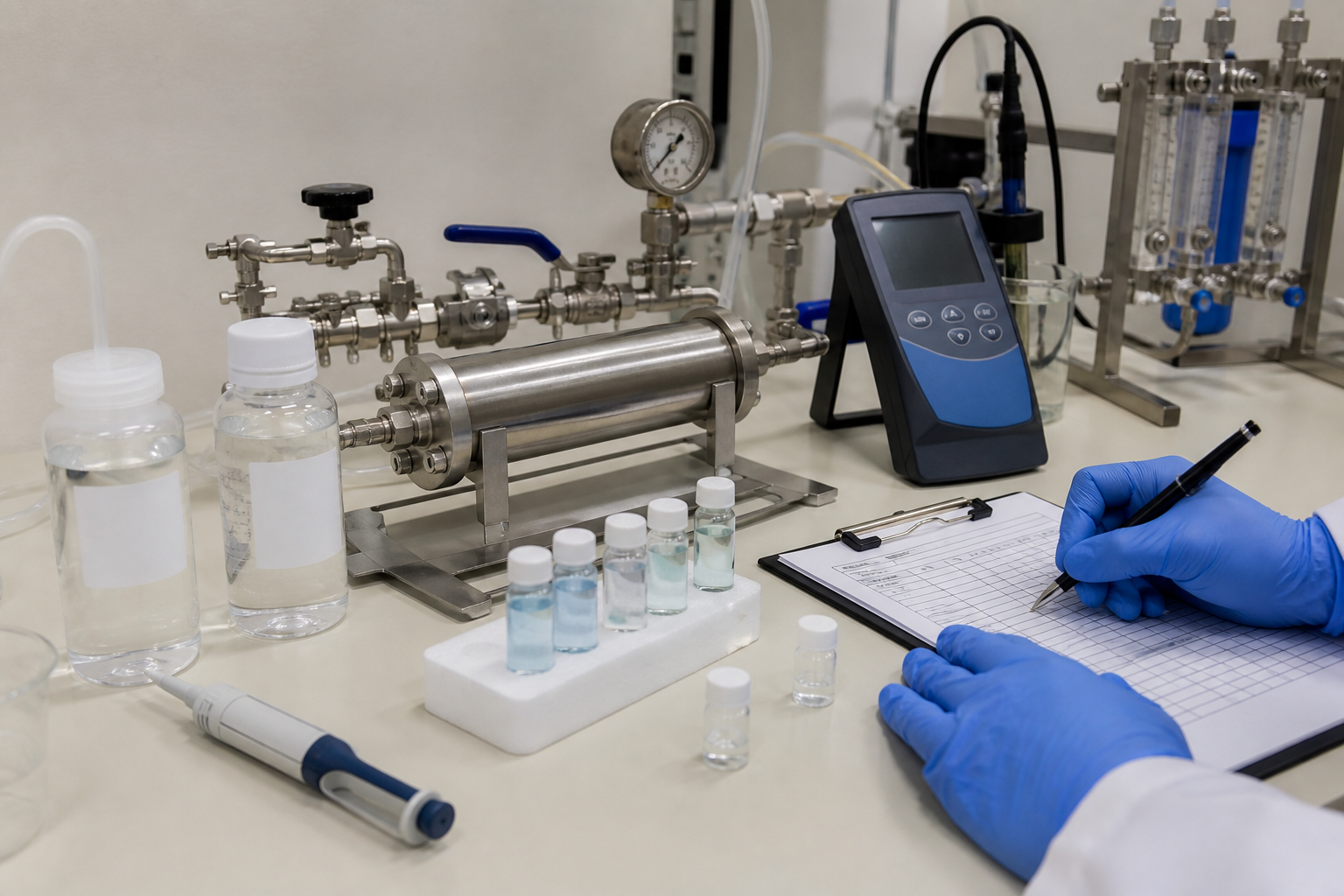
Carry the preparation that performed acceptably into a controlled equipment review. Consider working volume, agitation, vessel geometry, transfer time, minimum tank level and the pump's operating range. Review wetted materials and current chemical instructions with the supplier and equipment OEM. Veolia's chemical-feed guidance treats storage, preparation, transfer and feed arrangements as part of the delivery system; a beaker result alone does not describe that whole path.
Set site-specific acceptance and stop conditions before the trial. They may include appearance over the required hold period, measured chemical concentration where the method supports it, solids loading, filter or strainer condition, pump delivery and absence of unacceptable deposits in the preparation path. Record the starting condition and method for each endpoint. Avoid translating an instrument trend directly into an unmeasured treatment benefit.
After a water or preparation change, confirm both delivery and the receiving process's established monitoring programme. Stable make-up solution helps make dosing reproducible, but downstream scale and corrosion outcomes still depend on system chemistry and operation. Close the comparison with the people responsible for operation, laboratory interpretation and procurement so the approved sample, preparation instructions and eventual order refer to the same candidate.
Send the supplier a preparation problem that can be reproduced
For a useful HEDP or phosphonate-salt inquiry, include product name and form, lot or proposed grade, dilution-water analysis, recipe basis, other additions, vessel and feed arrangement, temperatures and expected holding period. Attach time-stamped observations and any solids or chemical analysis. Identify which controls stayed clear and which changed. State the application, sample quantity needed for the comparison, expected order quantity, packaging preference and destination.
Ask for current product-specific technical and safety information, the analytical basis used on the proposed specification, and sample availability for the defined trial. Discuss how the candidate should be prepared and handled under those documents. This lets the quotation address a repeatable water or preparation condition rather than a request to replace an inhibitor simply because a day tank looked cloudy. Discuss your dilution-water analysis and HEDP preparation trial →
Frequently asked questions
Does cloudy HEDP always mean calcium phosphonate precipitation?
No. Entrained air, incoming particles, contamination and different precipitates can look similar. Compare controls and identify persistent solids before assigning a mechanism.
Is softened water always suitable for making up HEDP?
Not automatically. Record the actual water composition, storage and preparation conditions. A hardness result alone does not establish compatibility with the product and other ingredients.
Can HEDP acid and HEDP-Na4 be compared at the same pump volume?
Use the documented identity, concentration basis and relevant density data to design the comparison. A volume-for-volume substitution can change both chemical input and the preparation conditions.
Should I filter a cloudy stock solution and keep dosing?
Follow the site batch-handling procedure and first establish what is being removed. Filtration can alter the treatment mixture and may not resolve the cause of recurring solids.
What should accompany a phosphonate preparation inquiry?
Provide the product form, water analysis, recipe, mixing and holding history, observations, receiving application, expected quantity and destination. Include the controls and analytical methods used.