
Biocides · Technical purchasing guide
Buying DBNPA: Match Product Form, Preparation Hold Time and Feed-Point Trials
Buy DBNPA against the exact supplied form and the path it will follow from preparation to injection, not against the chemical name alone. Confirm whether the offer is a solid or a formulated liquid, how its active content is expressed, and which current handling and application documents cover it. Then map the preparation water, vessel, holding period, transfer line, injection point and relevant process conditions. A satisfactory assay in the unopened product cannot show how an aged preparation reaches the target location. Compare fresh and held preparations using an appropriate chemical method and a representative microbial sampling plan. Resolve product authorization, material and equipment requirements for the receiving application before selecting a sample or approving a commercial order.
TL;DR
Separate three purchasing questions: what is in the supplied product, what happens before it reaches the process, and what the field trial measures. VCYCLETECH's DBNPA listing identifies a solid product; external liquid formulations are comparisons, not additional confirmed VCYCLETECH grades. Record the proposed active basis, preparation water, temperature, pH, holding history and feed arrangement. Check delivery and sample handling alongside microbial response so residual biocide does not distort the laboratory result. Compare candidates through a controlled preparation-to-feed trial and the applicable product documents. State the destination and intended use early, because approval of an active substance, authorization of a formulated product and a site's allowed use are different questions.
Start with supplied form and the analytical basis
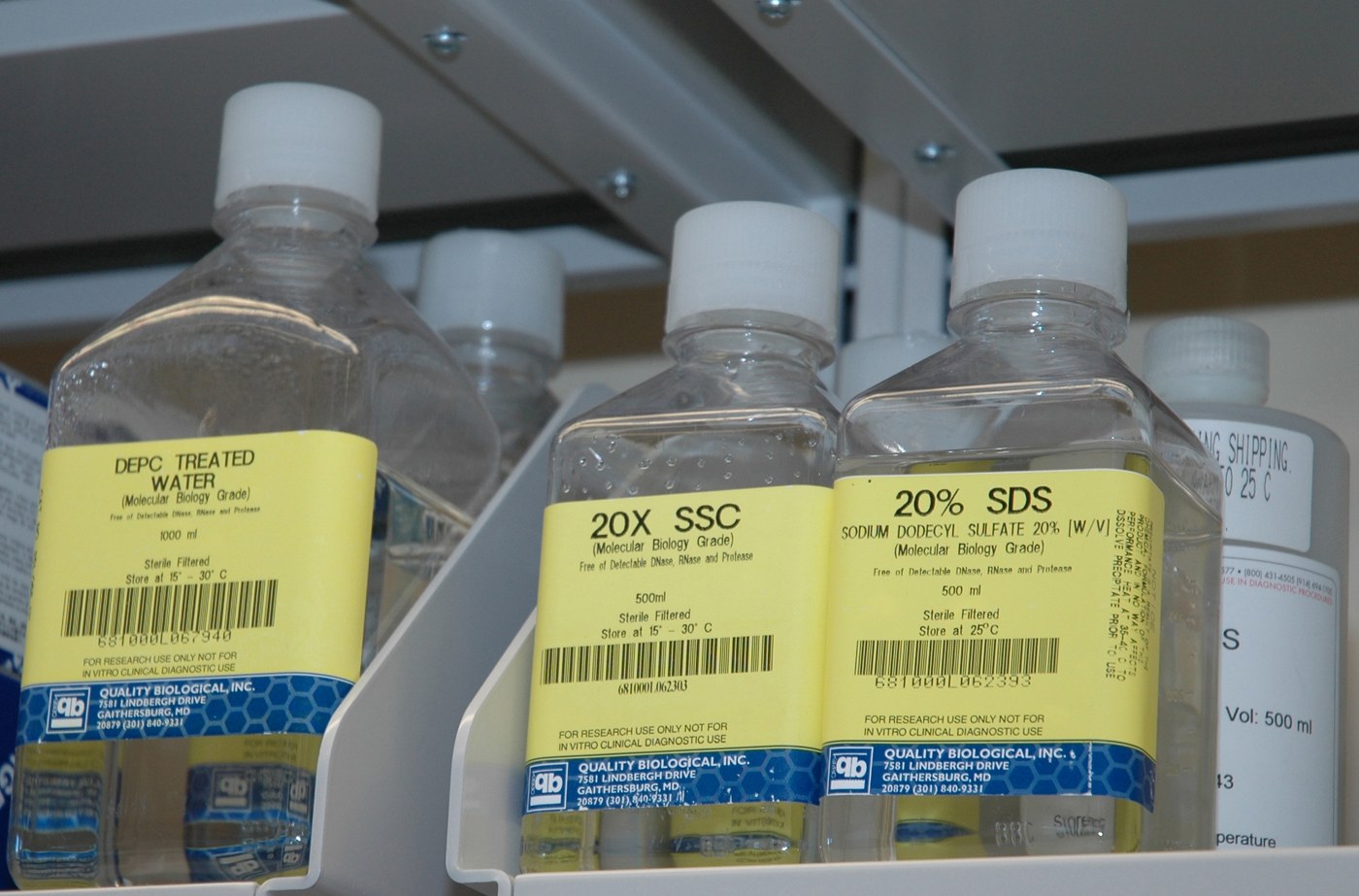
DBNPA is 2,2-dibromo-3-nitrilopropionamide, associated with CAS 10222-01-2. A chemical identity helps connect documents, but it does not describe the whole formulation. LANXESS, for example, lists a concentrated DBNPA powder, while BCI describes its own liquid formulation. These are different commercial preparations. A buyer should establish the offered form, concentration basis, carrier where applicable, relevant impurities, packaging and the current technical and safety instructions.
The VCYCLETECH DBNPA product page lists a solid with assay at least 99% as a catalog reference. Request the current specification and supporting documents for the actual proposed grade and destination. An external supplier's liquid concentration, stabilizer or handling statement must not be attached to that solid as if it were the same product. Equally, a high supplied assay does not remove the need to establish a suitable preparation and delivery route.
Write the purchase comparison on the same defined basis. Identify whether an analytical value refers to the supplied product, an active ingredient, a prepared solution or the receiving water. Include the method and units. Keep package quantity, freight and preparation requirements separate from any claim about treatment performance. The lowest price per container may not be the preferred option once the installation's documented preparation, handling and trial requirements are considered.
Map the whole preparation-to-feed path
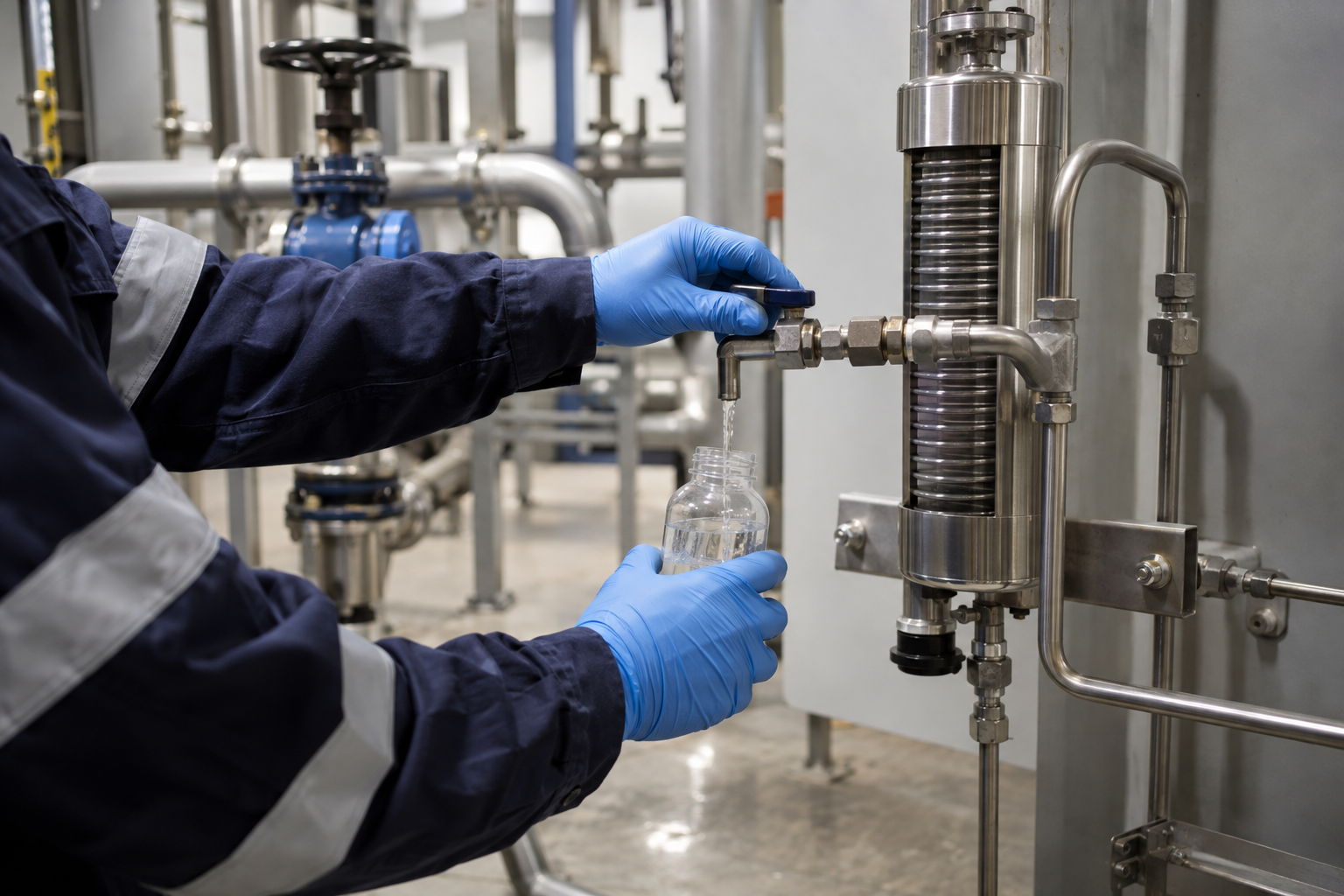
Draw the route from the unopened package through any make-up vessel, day tank, transfer line and injection connection. Record what happens during a normal batch and during an interruption. Identify the longest expected hold, the lowest operating tank level, any return to the vessel and sections left stagnant when equipment stops. Estimate residence from the actual working volume and operating flow, then check whether observed operation agrees with that estimate.
For each step, record preparation water, pH and temperature, product addition and mixing, contact with other chemicals, and the age of the material when a sample is drawn. Use the supplier's instructions and the site's approved chemical-handling arrangements. This is not an invitation to improvise a solvent system, add a stabilizer or combine concentrated treatment products. Those changes create a different formulation and require their own technical and safety review.
DBNPA stability depends on its environment and formulation. BCI's description of its own liquid highlights heat, light and alkaline conditions as considerations, but its values cannot define a universal hold time for another product. Ask how the proposed form should be prepared and what evidence supports holding it under the intended conditions. If the supplier cannot support the planned storage arrangement, change the arrangement or investigate another documented candidate before committing to routine supply.
Build a trial that separates preparation age from feed performance
Agree the trial question before choosing sample size. Is the concern an old day-tank preparation, unreliable pump delivery, a poorly mixed injection location or a different demand in the process water? Hold the other variables sufficiently constant to make the comparison interpretable. Use appropriate controls, replicate samples and the laboratory's established method, with handling and exposure conditions approved for the product and site.
| Trial element | Record and compare | Purchasing question answered |
|---|---|---|
| Supplied product | Identity, form, active basis, method and proposed grade | Are the offers actually comparable? |
| Fresh preparation | Water, mixing, temperature, pH and initial sample time | Can the intended form be prepared reproducibly? |
| Held preparation | Actual holding conditions and time-resolved chemical observations | Does the planned make-up arrangement remain supported? |
| Delivery path | Working volume, transfer, pump verification and injection state | Does the intended material reach the target point? |
| Microbial sampling | Method, transport, neutralization, controls and process exposure | Does the result represent the trial rather than continued bottle exposure? |
Record the exact time of preparation, injection and sampling rather than naming samples merely fresh or old. Include temperature, pH, water source, flow state and other relevant additions. Where a validated method is available, compare the chemical at suitable points along the preparation and delivery route. A loss between two points deserves a process explanation before the buyer asks for a stronger grade.
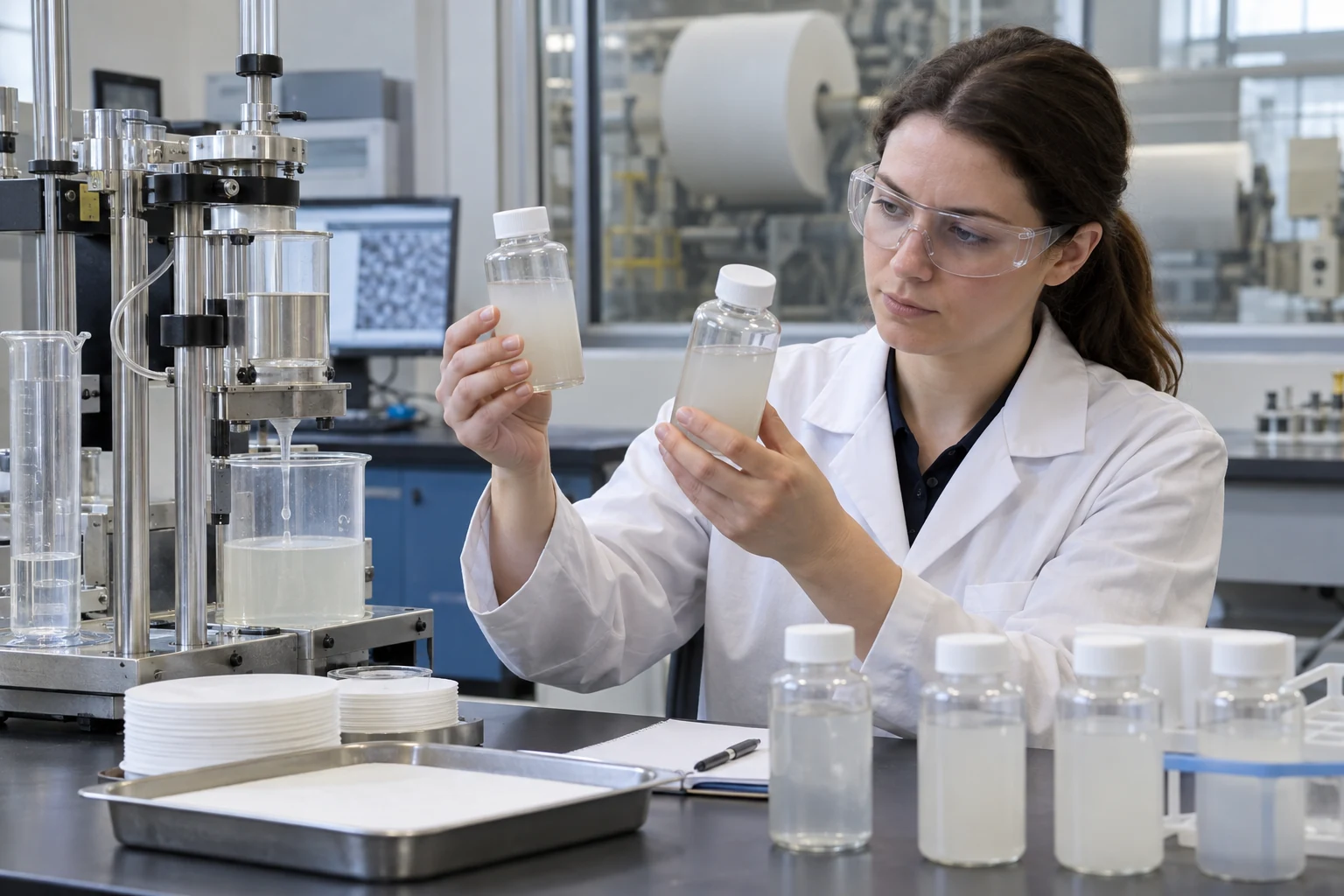
For the microbial side, agree collection containers, transport, timing, neutralization and the analytical method with the laboratory. Biocide carried into a sample can continue affecting organisms after collection and distort the comparison. Distinguish the process exposure from the time spent in a bottle. ATP, culture and other methods answer different questions; define the endpoint and how a change will be interpreted before the first trial result arrives.
Check delivery and system suitability before escalating chemistry
Review the feed equipment with the responsible engineer: actual delivery, pump calibration or verification method, material suitability, suction arrangement, injection fitting, backflow protection and available mixing. A scheduled pump event is not a measurement of the amount or condition reaching the treatment point. Compare operating states that can change delivery, such as a batch restart, low tank level or a change in receiving-water flow.
Keep the chemical and mechanical reviews connected. If an aged preparation changes while a freshly prepared comparison does not, examine the supported hold window and preparation system. If chemical delivery is consistent but response varies with process-water conditions, investigate those conditions and the trial method. If only the collected sample changes, revisit sampling and neutralization. These results lead to different operating or purchasing decisions.
Use the industrial-water biocide range for a broader family discussion only when the application evidence calls for it. If the main problem is repeated attached growth and reinoculation, the cooling-water biofilm recurrence guide addresses that separate decision. For a receiving cooling circuit, connect the trial with the cooling-water application review. A DBNPA purchase cannot substitute for source cleaning, process correction or a complete water-treatment programme.
Check the destination and intended use before the order
Ask for the destination, intended industrial use and applicable product documents at the start of the inquiry. The same chemical identity can appear under different regulatory product types and national requirements. Confirm that the proposed product and use are covered by the receiving market's requirements, current authorization where applicable, label and site procedures. A catalog identity or laboratory response is not a market-access document.
For an important current example, EU Implementing Regulation 2026/577 sets a conditional DBNPA product-type 11 active-substance approval period beginning 1 July 2027. Its annex restricts the uses and includes additional conditions; it is not blanket approval of every DBNPA formulation or every industrial application. The original regulation is available through Spain's official BOE publication. Separately, the UK HSE's March 2026 bulletin concerns DBNPA in Great Britain product type 2, with specific phase-out dates. Do not transfer that product-type decision to all cooling-water uses.
These examples explain why a supplier needs a precise destination and duty, rather than a request for globally compliant DBNPA. Have the relevant importer, authorization holder or qualified local adviser check the exact case. This article does not assign an authorization to VCYCLETECH's product. Where documents or use permissions remain unresolved, keep that issue separate from the technical trial and settle it before an order is released.
Set sample acceptance and the next purchase step
Define acceptance around the actual installation: a supported supplied identity, reproducible preparation, acceptable condition at the required hold age, verified delivery and a meaningful response under the defined trial. Include adverse observations and stop conditions, such as an unexplained preparation change, unacceptable equipment response or a failure of the sampling control. The site team should decide how affected material and equipment are handled under existing procedures.
Then compare candidates on the evidence collected, including repeatability and the practical demands of preparation. One successful fresh-solution test should not authorize a month of routine day-tank operation without checking the relevant hold and interruption conditions. Likewise, one poor microbial result should not trigger an automatic dose increase if sample handling, delivery or the process state has changed. Reproduce the condition that caused the purchasing question.
For the inquiry, supply the intended application, water analysis and relevant pH and temperature history, proposed form, preparation and holding arrangement, injection and sampling map, other treatments, trial endpoints and available results. Add the required sample quantity, expected order quantity, packaging and destination. Ask for the current grade-specific technical and safety documents and any applicable use documentation. Discuss a DBNPA sample and preparation-to-feed trial →
Frequently asked questions
Can DBNPA powder replace a liquid formulation at the same feed setting?
No volume-for-volume substitution should be assumed. Reconcile supplied form, active basis, preparation, relevant density and the permitted application instructions before designing a comparison.
Is there one safe holding time for diluted DBNPA?
A universal holding time cannot be assigned from the chemical name. Obtain guidance for the exact formulation and test the intended water, temperature, pH and preparation conditions.
Does a high assay prove successful microbial control?
The supplied-product assay addresses material composition. Preparation age, delivery, process demand, contact and sampling affect how a field trial should be interpreted.
Why should the laboratory specify sample neutralization?
A suitable sampling method must distinguish process exposure from continued biocide action after collection. Agree the method, neutralizer where required, timing and controls with the laboratory.
What should I send with a DBNPA quotation request?
Include the exact application and destination, requested product form, water and operating conditions, preparation and hold arrangement, trial plan or results, quantity and packaging needs.