
Boiler water · oxygen-scavenger delivery
Boiler Oxygen Scavenger Injection Point: Choose for Reaction Time and Mixing
The best oxygen-scavenger injection point is the point that gives the selected chemistry predictable mixing and enough useful reaction time before the water reaches the part of the system it is meant to protect. That is often downstream of the deaeration step, but a tank, downcomer, feedwater header or another location serves different hydraulic conditions. Map the deaerator, storage section, feedwater pumps, economizer, sampling points and return path before moving a pump. Then compare the scavenger’s verified product instructions with water temperature, dissolved-oxygen trend, pressure, load changes, contact time and material of construction. A feed point that looks convenient may create poor dispersion, short residence time or concentrated contact. The right decision is a system layout and verification decision, not a fixed distance or universal dosing rule.
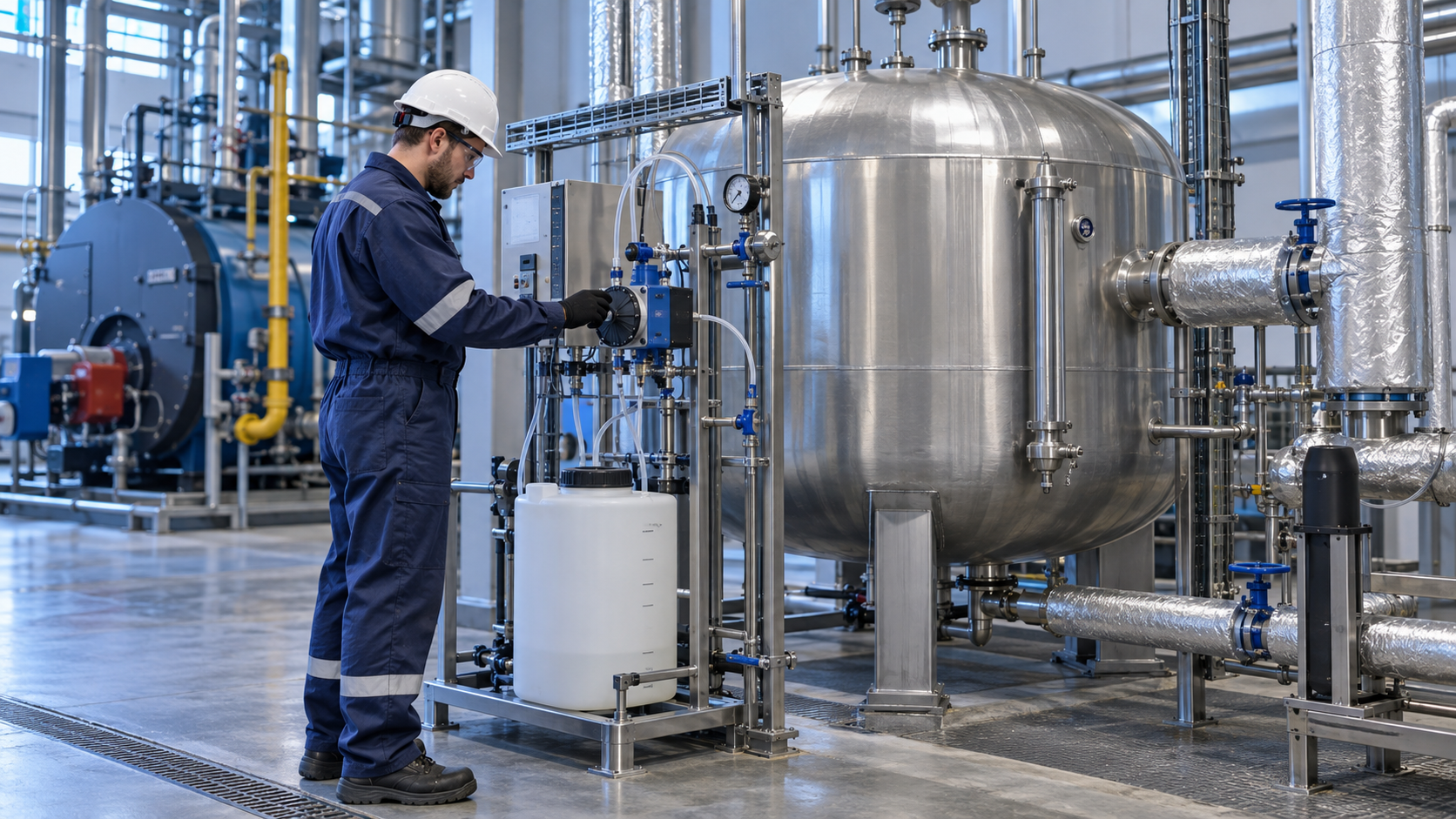
Map the water path before selecting a point
An oxygen scavenger belongs in a complete oxygen-control program, not in isolation from it. Mechanical deaeration removes much of the dissolved oxygen; the scavenger then handles the residual within the selected treatment program. The DOE steam handbook notes that a feedwater storage tank is generally preferred for chemical addition when maximum reaction time is valuable, while other locations may be appropriate for particular systems.1 That principle is useful, but the actual tank volume, temperature, level control and travel time decide whether it transfers to a given boiler.
Draw the real flow path: makeup and return entry, deaerator vent and storage section, pump suction and discharge, economizer, boiler inlet, recirculation lines, existing injection quills and sample coolers. Mark the minimum and maximum flow periods. A location that mixes well at normal demand may become ineffective when a standby pump starts or when the deaerator level changes.
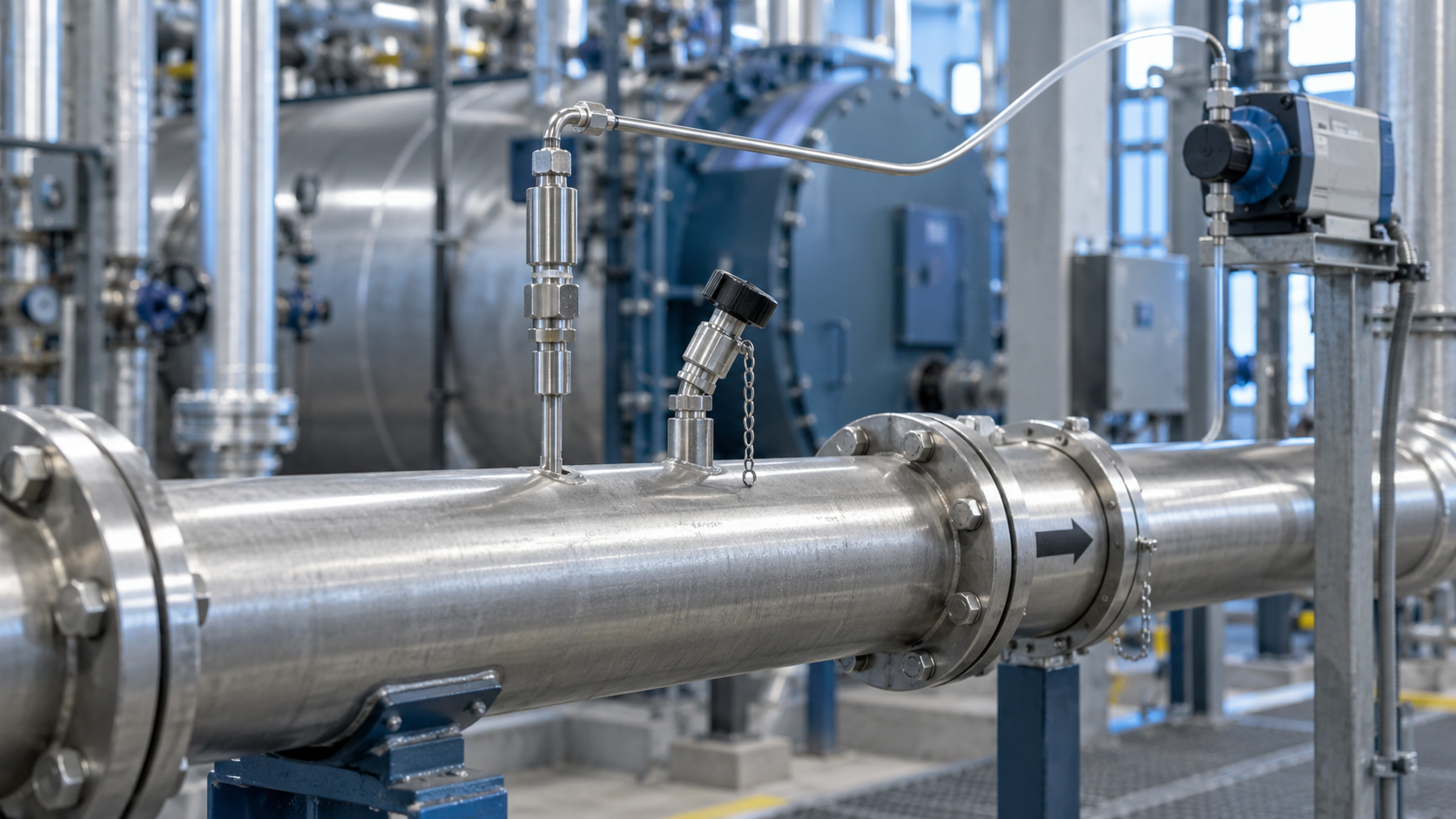
Compare common injection locations by what they deliver
| Potential location | What it can offer | What must be checked | When it needs a second look |
|---|---|---|---|
| Deaerator storage section | Warm water and possible residence time after deaeration. | Turnover, mixing, level variation, tank internals and product instructions. | Short hold-up during load swings or uncertain dispersion. |
| Feedwater-pump suction or discharge line | Defined pipe flow and an accessible metering connection. | Injection-quill design, local velocity, backpressure, compatibility and time to the boiler. | Low flow, pulsation, poor mixing or excessive local concentration. |
| Feedwater header upstream of economizer | A stable common flow path on some installations. | Travel time, temperature, flow split and protection target. | Sampling cannot distinguish poor deaeration from poor delivery. |
| Remote tank or day-tank transfer | Can simplify chemical handling. | Whether the chemistry is being injected into the process water—not merely stored—and whether the downstream feed point is controlled. | The tank is mistaken for reaction time without verified water contact. |
The American Water Technologies technical manual places oxygen scavengers downstream of the deaerating section and discusses deaerator storage or downcomer addition as common arrangements.2 Use that as a layout prompt, not a specification. The selected product’s current instructions, the boiler design and the plant water chemistry take precedence.
Use operating conditions to rule locations in or out
Five conditions usually decide whether a point deserves a field trial:
- Reaction opportunity: water temperature and the travel time between first full mixing and the protection target.
- Hydraulic reliability: flow changes, pump cycling, line velocity and whether all feedwater passes the point.
- Mixing quality: injection quill orientation, turbulence, dead legs and the risk of a concentrated chemical zone.
- Oxygen source: deaerator performance, venting, make-up quality, return condition and possible air ingress.
- Measurement: a sample point and method that can distinguish a delivery problem from a changing oxygen load.
BLRBAC’s boiler-water guidance describes putting chemical injection into a moving deaerator downcomer and cautions against co-injecting scavengers and amines without establishing compatibility; its recommendation is written for recovery-boiler conditions, so it should not be copied into every boiler layout.3 The broader lesson is sound: design around first contact, dilution and the chemistry actually being used.
Use a specific product discussion only after the system route is clear. Carbohydrazide and DEHA are cataloged oxygen-scavenger routes on this site, but their finished-product suitability, concentration and feed method must be confirmed against current product information and representative operating conditions.
Verify mixing and response instead of moving the pump by instinct
Before changing location, document the current state: dissolved-oxygen values at an appropriate point, deaerator operating condition, feedwater temperature, pump stroke or speed, product batch/strength, normal load range and relevant corrosion or iron trends. After a controlled location or hardware change, compare the same indicators at similar operating conditions. A stable result through a load change is more useful than a single low oxygen reading at one steady point.
If oxygen remains high, do not assume the remedy is more scavenger. Check whether the deaerator is meeting its design operating window, whether air is entering downstream, whether the metering system is accurate, and whether the sample point is representative. Veolia’s chemical-feed guidance similarly treats chemical selection, pump configuration and injection location as a combined design problem rather than a drum-to-line connection.4
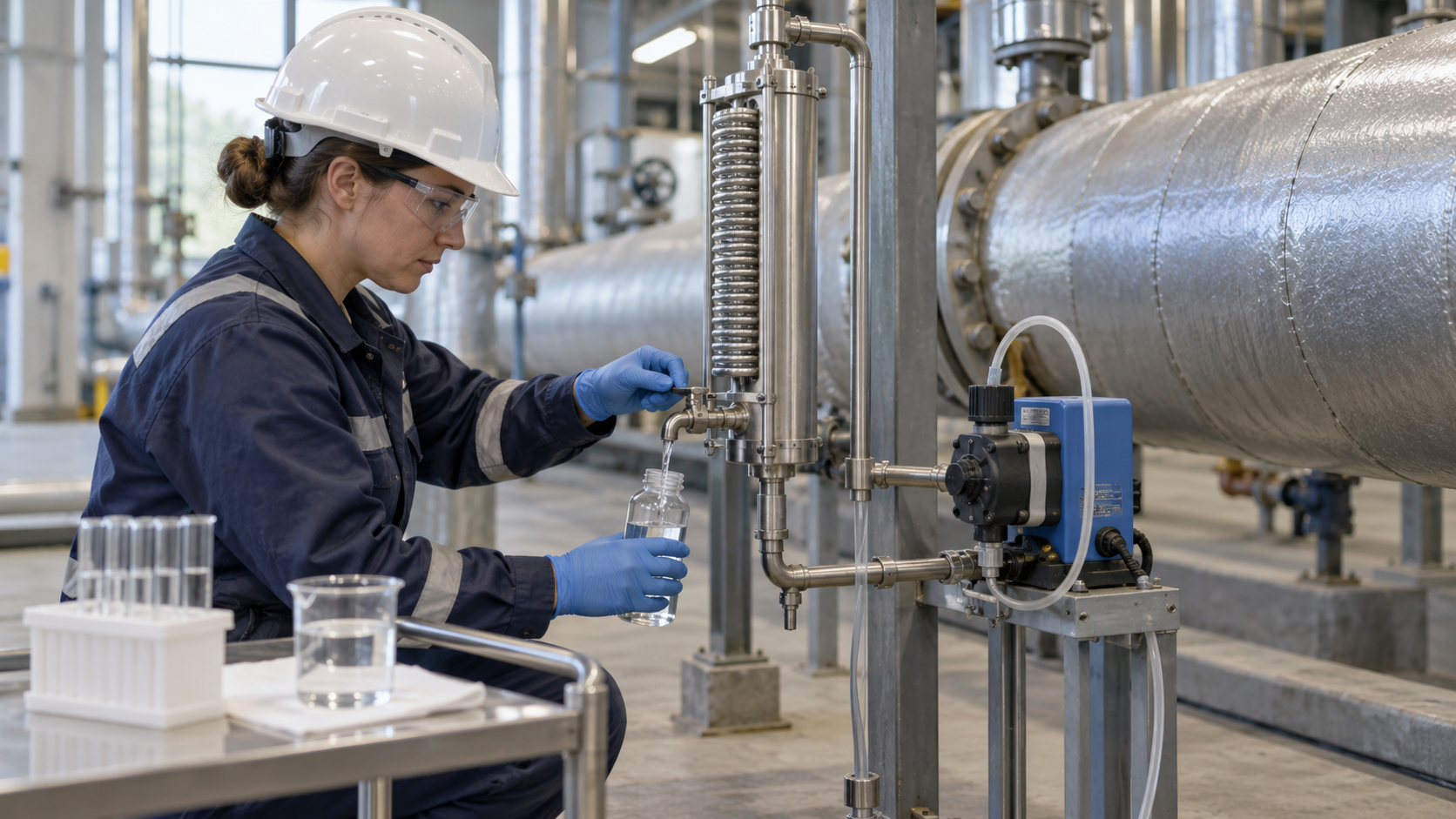
Choose the next engineering action
When the layout supports good mixing and residence time but oxygen trends remain poor, investigate the mechanical and air-ingress side of the system. When deaeration is stable but the feed point has short or erratic contact, redesign the injection route before revising the chemical program. When the physical route is sound and the program still needs adjustment, review the selected scavenger chemistry with the boiler-water treatment application path and the verified product documents for the exact grade.
For a practical review, share a simplified P&ID or water-path sketch, boiler pressure and load range, deaerator arrangement, makeup/return condition, feedwater temperature, dissolved-oxygen trend, current injection point, pump details, sample locations and the exact product grade. Discuss an oxygen-scavenger feed-point layout →
Frequently asked questions
Where should an oxygen scavenger be injected in a boiler system?
Often downstream of mechanical deaeration, at a location that provides controlled mixing and useful reaction time. The exact point depends on the deaerator, tank turnover, feedwater route, product instructions and protection target.
Is the deaerator storage section always the best feed point?
No. It can provide warm water and residence time, but only if turnover and mixing are adequate for the selected program. Some systems use a suitable downcomer or feedwater location instead.
Can I increase the scavenger feed when oxygen remains high?
First check deaerator operation, downstream air ingress, pump calibration, actual product strength, mixing and sample representativeness. Increasing feed does not correct a hydraulic or mechanical limitation.
Can oxygen scavenger and condensate amine share an injection point?
Do not assume they can. Confirm finished-product compatibility and local dilution before combining feeds; separate injection points may be needed to avoid concentrated contact.
What information is needed to choose a feed point?
Provide the water-path layout, boiler load and pressure range, deaerator details, feedwater temperature, flow changes, current product grade, pump/injection hardware and representative dissolved-oxygen data.
Sources
- U.S. Department of Energy, Improving Steam System Performance — deaeration, chemical addition and reaction-time context.
- Association of Water Technologies, Boiler System Chemical Treatment — downstream-of-deaeration oxygen-scavenger placement context.
- BLRBAC, Boiler Water Management Guidelines — injection/mixing examples and context-specific cautions.
- Veolia Water Handbook, Chemical Feed Systems — chemical-feed and injection-system design context.
Checked 2 October 2026. Sources describe operating principles; they do not prescribe a universal location, dosage, reaction time or VCYCLETECH product performance.