
Boiler Water Treatment Chemicals Explained
TL;DR Boiler-water treatment is a combination of feedwater quality, deaeration, internal chemistry and condensate protection—not a single drum. Start with pressure, makeup and return-water analyses, metallurgy, oxygen, hardness and the steam-use requirements. A scale-control product, oxygen scavenger or condensate amine solves a different part of the system. Choose the exact grade and injection point with the plant's boiler specialist, then follow feedwater, boiler-water and condensate trends to see whether the complete program is working.
The three groups
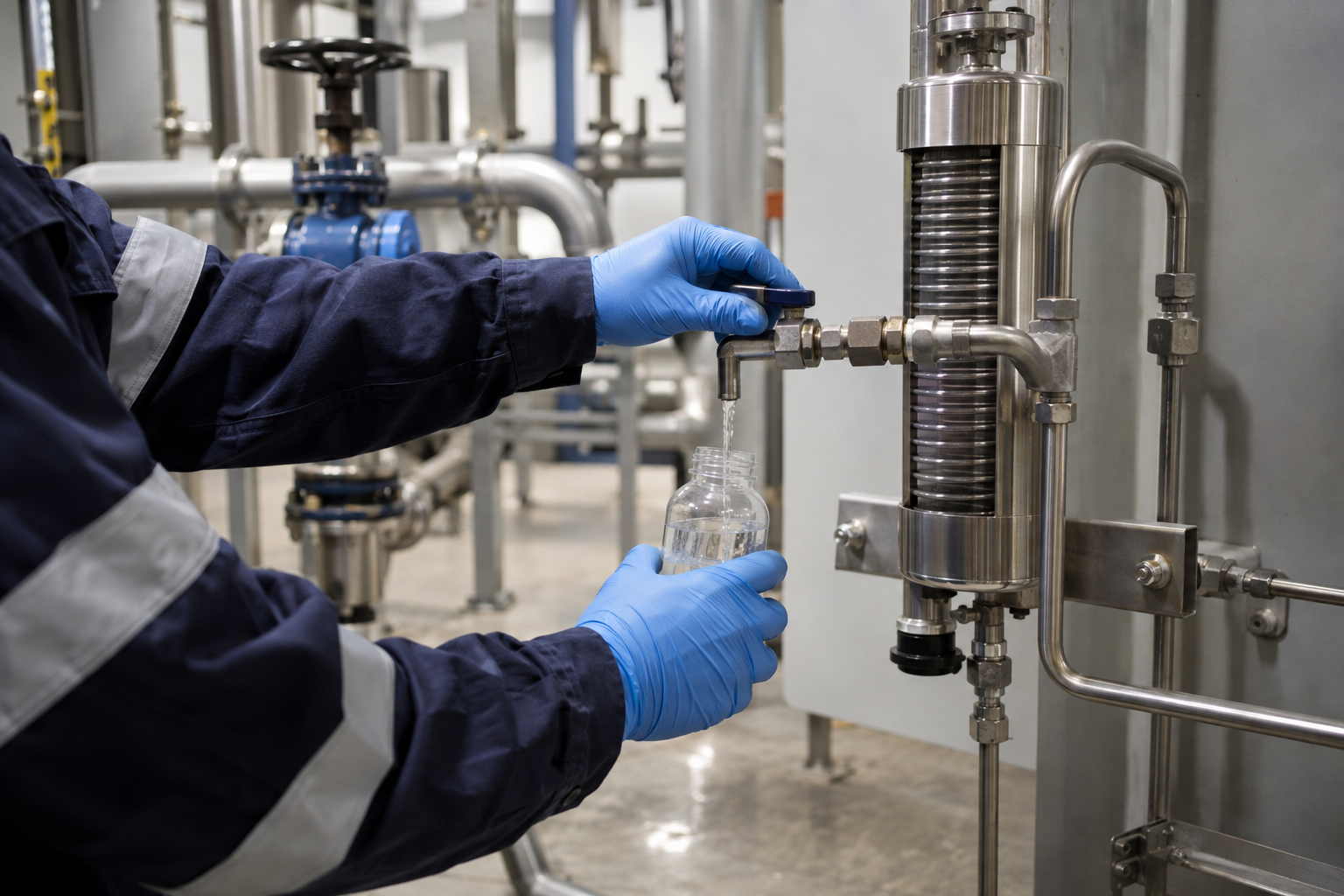
- Scale & corrosion: phosphonates (HEDP, ATMP) and formulated WT-503.
- Oxygen scavengers: DEHA, carbohydrazide — hydrazine-free.
- Condensate amines: morpholine, cyclohexylamine.
Full program: boiler water treatment.
Watch

Frequently asked questions
Which chemical is used in boiler water treatment?
A scale & corrosion inhibitor (phosphonate or formulated WT-503), an oxygen scavenger (DEHA/carbohydrazide) and a neutralizing amine.
What is the best oxygen scavenger for boilers?
First confirm deaerator performance, oxygen sampling and the remaining oxygen load. Compare a scavenger's chemistry, permitted operating range, steam-contact constraints and current supplier documents against the boiler and condensate system before setting a feed trial.
About the manufacturer
VCYCLETECH is a China-based manufacturer of water treatment chemicals — antiscalants, scale & corrosion inhibitors, coagulants, flocculants, biocides, dispersants and paper chemicals — ISO 9001 / 14001 / 45001 certified, with current COA information on request and OEM/ODM service. See our quality & certifications.
Related: Boiler application · DEHA · Boiler guide