
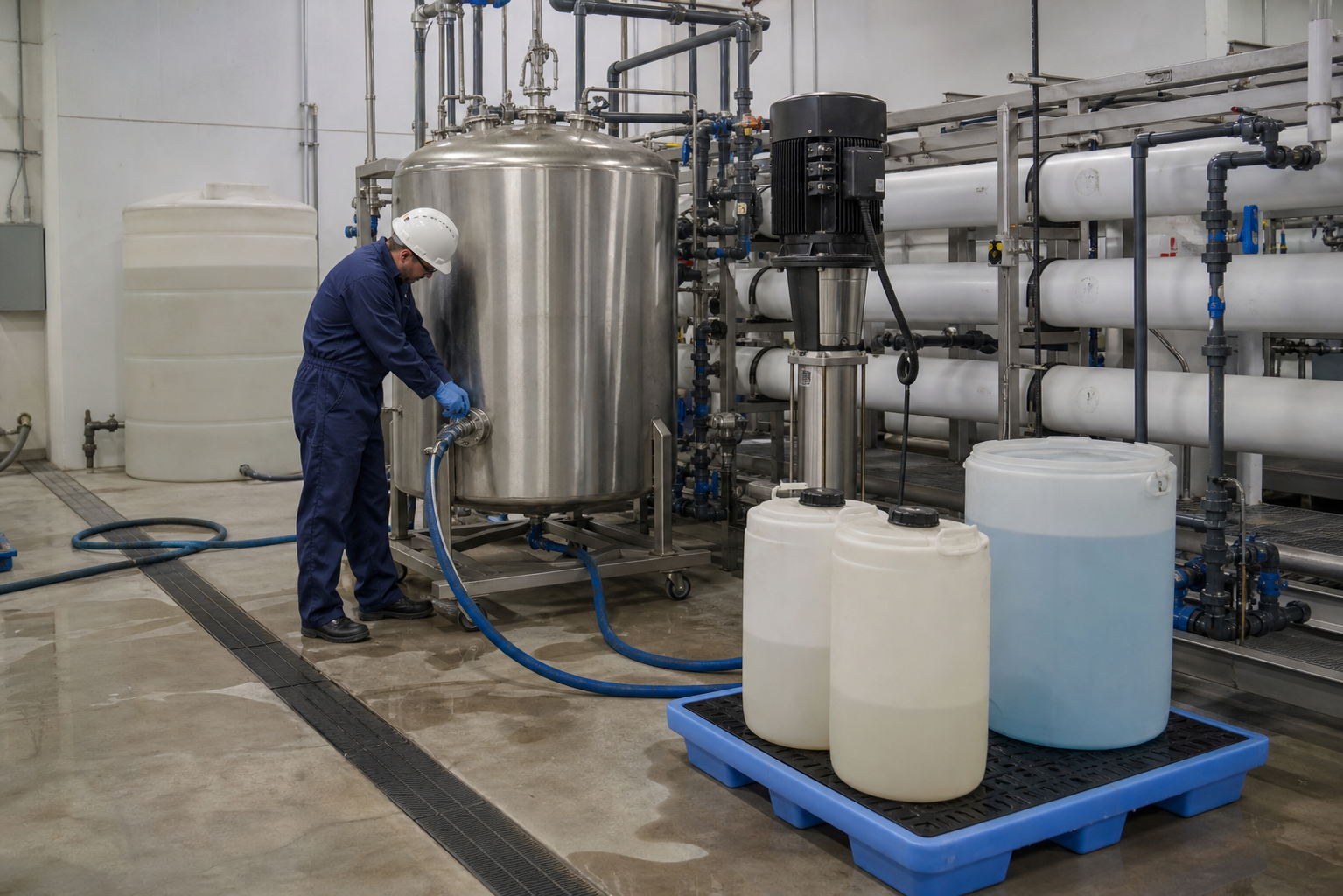
RO Cleaning Chemical Selection: Acid, Alkaline and Biocide Decision Tree
TL;DR RO cleaning chemistry should be selected from the diagnosed foulant, membrane compatibility, pH and temperature limits—not from a generic acid-versus-alkaline rule. Acid cleaners can address suitable mineral deposits; alkaline cleaners can address many organic or biological foulants; and a non-oxidizing biocide may be relevant to biofouling control. Confirm the exact membrane supplier limits, system materials and cleaning sequence before use.
Which chemical should I use to clean an RO membrane?
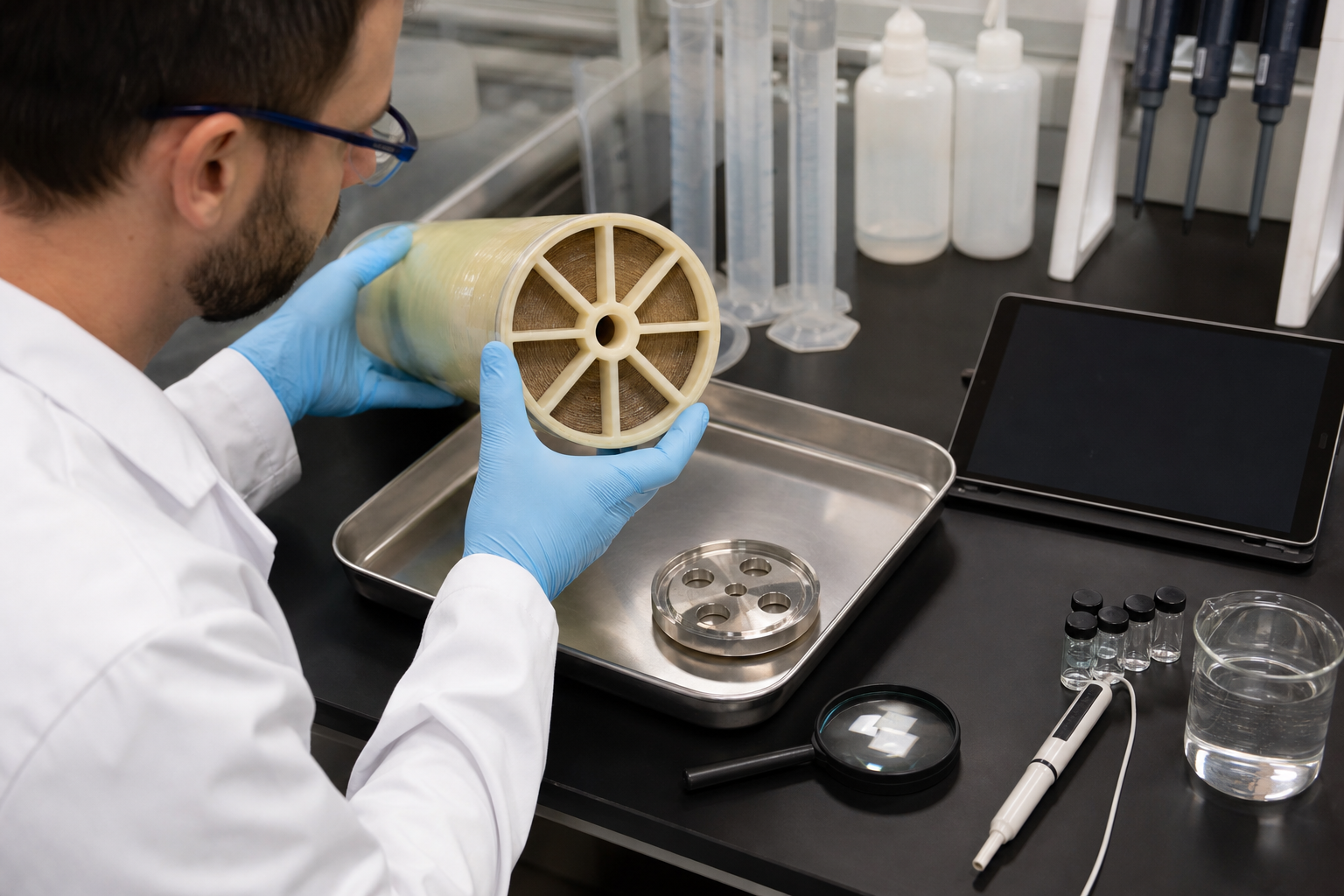
Start with evidence, not bottle colour or a standing recipe. Review normalized permeate flow, salt passage and pressure-drop trend; inspect pre-treatment and feed changes; preserve representative deposit evidence where feasible; and identify the installed membrane model. DuPont’s February 2026 cleaning guidance distinguishes acid cleaners for inorganic precipitates including iron from alkaline cleaners for organic and biological matter, while explicitly applying pH/temperature windows to defined element families. That is a decision framework—not permission to apply the same chemistry to every membrane or system.
| Diagnosed or suspected condition | Potential cleaning direction | Evidence needed before selection | Critical boundary |
|---|---|---|---|
| Mineral scale such as carbonate or certain metal-oxide deposits | Membrane-approved acid formulation may be considered. | Water/concentrate chemistry, deposit identification, membrane model, pH/temperature window and system-material compatibility. | Acid is not a universal answer for all inorganic deposits; sequence and limits are model- and foulant-specific. |
| Organic, colloidal, oil or many biological deposits | Membrane-approved alkaline cleaner, often with appropriate surfactant or chelant components, may be considered. | Foulant evidence, pre-treatment carryover, membrane limits, pH/temperature limits and rinse plan. | Alkaline cleaning does not dissolve every mineral scale and may be unsuitable outside OEM limits. |
| Biofouling or microbiological growth | Diagnose the whole system; membrane-approved alkaline cleaning and/or a non-oxidizing biocide pathway can be relevant. | Microbiological/deposit evidence, pretreatment and dead-leg review, membrane/OEM biocide limits and disposal requirements. | Do not assume an oxidizing disinfectant is compatible with a polyamide RO element. |
| Mixed or layered fouling | A staged, membrane-approved sequence may be necessary after diagnosis. | Element/foulant information, OEM instructions, each rinse endpoint and a controlled recovery/verification plan. | Wrong chemistry or order can redistribute or worsen a deposit; do not combine chemical families without written procedure. |
When should RO cleaning be acidic or alkaline?
Acid and alkaline are mechanisms, not product categories to alternate by habit. The current FilmTec technical manual lists acid and alkaline cleaning options against specified foulant classes and explains that pH/temperature limits change by element type. Hydranautics guidance likewise recommends investigating the signs of fouling before selecting chemistry and says complicated fouling can require a qualified sequence. Use those sources to build a membrane-specific decision record; do not turn their example concentrations, targets or sequence into a universal onsite formula.
| Decision checkpoint | Acid-path question | Alkaline-path question | What to document |
|---|---|---|---|
| Foulant identity | Is there credible evidence of a compatible mineral precipitate or metal oxide? | Is there credible evidence of organic, colloidal, oil or biological material? | Trend data, source/pre-treatment changes, analytical evidence and any representative inspection. |
| Membrane limit | Does the exact element permit the proposed pH, temperature, contact and flow? | Does the exact element permit the proposed pH, temperature, contact and formulation? | Current OEM document/version and any written supplier compatibility statement. |
| System compatibility | Are vessel, piping, seals, CIP skid and disposal pathway compatible? | Are vessel, piping, seals, CIP skid and disposal pathway compatible? | Materials list, SDS, cleaning plan and neutralization/disposal controls. |
| Verification | Has the rinse endpoint and return-to-service process been defined? | Has the rinse endpoint and return-to-service process been defined? | pH/rinse checks, normalized baseline comparison and product-water disposition plan. |
Can a non-oxidizing biocide be used for RO biofouling?
It may be relevant only after the membrane OEM’s current requirements and the system’s biocide compatibility have been checked. Hydranautics notes non-oxidizing biocide in specific procedural context, while also requiring membrane-qualified chemistry and appropriate exposure conditions. This is materially different from assuming that an oxidizing disinfectant is acceptable for every RO element. Address upstream sources, pretreatment, piping, tanks and dead legs as part of the diagnosis; a single membrane circulation step may not correct the cause of biological loading.
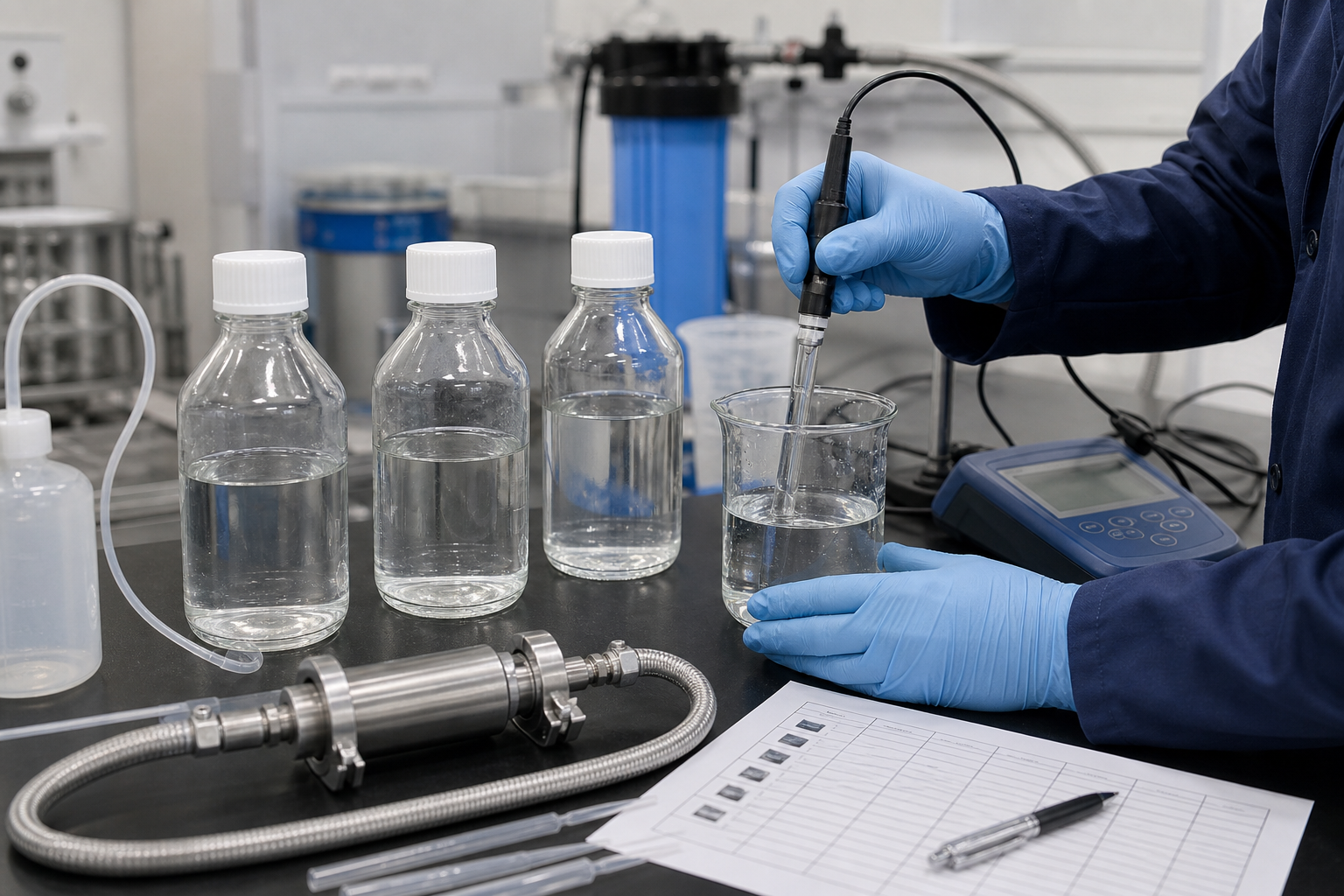
RO cleaning chemical decision tree
- Confirm the performance signal. Normalize and verify the change before assuming chemical cleaning is needed. Note source-water, temperature, recovery and pressure changes.
- Diagnose the likely foulant. Combine water chemistry, pre-treatment review, physical observations and, where warranted, representative analytical evidence.
- Check the exact membrane limits. Obtain current OEM pH, temperature, oxidant and chemical-compatibility boundaries for the installed element—not a similar product line.
- Choose a bounded path. Match the proposed acid, alkaline or non-oxidizing biocide path to the diagnosis. For layered foulants, document the order and rinse between stages.
- Control preparation and CIP. Verify chemicals are mixed/dissolved, use approved quality water where required, control pH/temperature/contact time and record circulation conditions.
- Rinse and verify. Follow the approved rinse/return procedure, manage product-water disposition, compare normalized results to baseline and address the upstream cause.
Cleaning chemistry procurement and verification file
- Membrane element model, current OEM pH/temperature/oxidant guidance and pressure-vessel/system-material list.
- Normalized permeate flow, salt passage and pressure-drop history with operating conditions and source-water changes.
- Feed/concentrate analysis, pretreatment status, cleaning history, photographs/inspection notes and any deposit analysis.
- Proposed cleaner or biocide TDS, SDS, COA, active-ingredient information where supplied, dilution/preparation instructions and written compatibility confirmation.
- CIP skid volume, circulation path, filtration, temperature control, rinse-water quality, waste handling and return-to-service procedure.
- Acceptance criteria, stop conditions, operator safety controls, rinse-verification record and corrective-prevention plan.
Use the RO chemicals category for the relevant product family, then read the established RO membrane cleaning: acid and alkaline cleaners and RO membrane fouling diagnosis for supporting context. If mineral scaling is part of the fouling mechanism, review RO antiscalant selection and dosing and use the related RO antiscalant trial protocol to avoid transferring a chemistry decision across changed feedwater conditions. Send the water and operating details through technical inquiry; this page is a decision framework, not a cleaning recipe.
Frequently asked questions
Which chemical should I use to clean an RO membrane?
Choose from the diagnosed foulant and the exact membrane’s current compatibility limits. Mineral scale or metal oxides may point to a membrane-approved acid path; many organic or biological deposits may point to an alkaline path; biofouling can add a membrane-approved non-oxidizing biocide decision. Do not use a generic recipe.
When should RO cleaning be acidic or alkaline?
Use acid or alkaline chemistry because the foulant evidence and membrane-OEM limits support it, not because of a fixed schedule. Acid paths can address suitable inorganic deposits; alkaline paths can address many organic, colloidal and biological deposits. Mixed deposits may require a documented, membrane-approved staged sequence.
Can a non-oxidizing biocide be used for RO biofouling?
Potentially, but only within the exact membrane supplier’s current biocide, pH, temperature and oxidant restrictions and a qualified system procedure. Diagnose upstream sources and dead legs as well. Never assume an oxidizing disinfectant or a biocide approved elsewhere is compatible with a polyamide RO element.
Why must RO cleaning pH and temperature be checked together?
Membrane cleaning limits are typically expressed as combinations of pH and temperature, and the allowed range can vary by membrane family. Check the installed element’s current OEM document before preparing or circulating chemistry. A pH that seems familiar can still be unacceptable at a different temperature or contact condition.
How do I verify that RO cleaning worked?
Follow the approved rinse and return-to-service procedure, then compare normalized permeate flow, normalized salt passage and pressure drop with a documented baseline under comparable operating conditions. Also inspect the recurrence cause: feedwater, pretreatment, recovery, chemical carryover, biological source or operating change.
About the author and evidence
To narrow the available grades, share the industry, water or process conditions, treatment objective, current program, required quantity, packaging and destination. Representative sample results are helpful when performance depends on site water chemistry.
References
- DuPont FilmTec cleaning procedures excerpt (February 2026)
- DuPont FilmTec RO/NF technical manual (February 2026)
- Hydranautics fouling and cleaning procedures for composite polyamide elements
- Peer-reviewed review: RO/NF organic-fouling countermeasures and cleaning boundaries
Related: RO chemicals · RO fouling diagnosis · RO antiscalant selection · Technical inquiry