
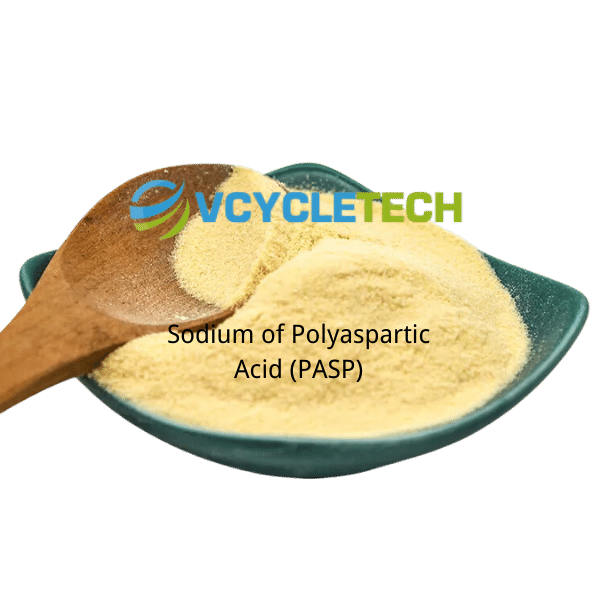
What Is Polyaspartic Acid (PASP)? Green Scale Inhibitor
TL;DR Polyaspartic acid (PASP) is a phosphorus-free polymer family considered for scale control and dispersion. To evaluate a grade, use the actual water analysis, target deposit, pH, temperature and current treatment program. Ask for its composition and any biodegradation data for the exact material; the family name alone does not establish a discharge outcome or a plant dose. Compare candidate treatments on the same water and monitoring endpoints, including scaling and compatibility with other chemicals.
Properties
PASP is readily biodegradable, non-phosphorus and non-nitrogen-polluting, effective over a wide temperature and pH range, and also works as a fertilizer-efficiency and scale-control agent in agriculture.
Uses
Green cooling-water and RO antiscalant, oilfield scale control, and where discharge limits restrict phosphonates. Pairs with PESA for phosphorus-free programs.
Watch

Frequently asked questions
What is PASP used for?
As a biodegradable, phosphorus-free scale and corrosion inhibitor and dispersant in cooling water, RO and oilfield systems.
Is polyaspartic acid environmentally friendly?
It can be a phosphorus-free option, but 'environmentally friendly' is too broad for a product decision. Compare the exact formulation's biodegradation data, discharge conditions and treatment performance with the alternative program.
About the manufacturer
VCYCLETECH is a China-based manufacturer of water treatment chemicals — antiscalants, scale & corrosion inhibitors, coagulants, flocculants, biocides, dispersants and paper chemicals — ISO 9001 / 14001 / 45001 certified, with current COA information on request and OEM/ODM service. See our quality & certifications.
Related: PASP · Green antiscalants · Cooling water · PESA vs PASP