
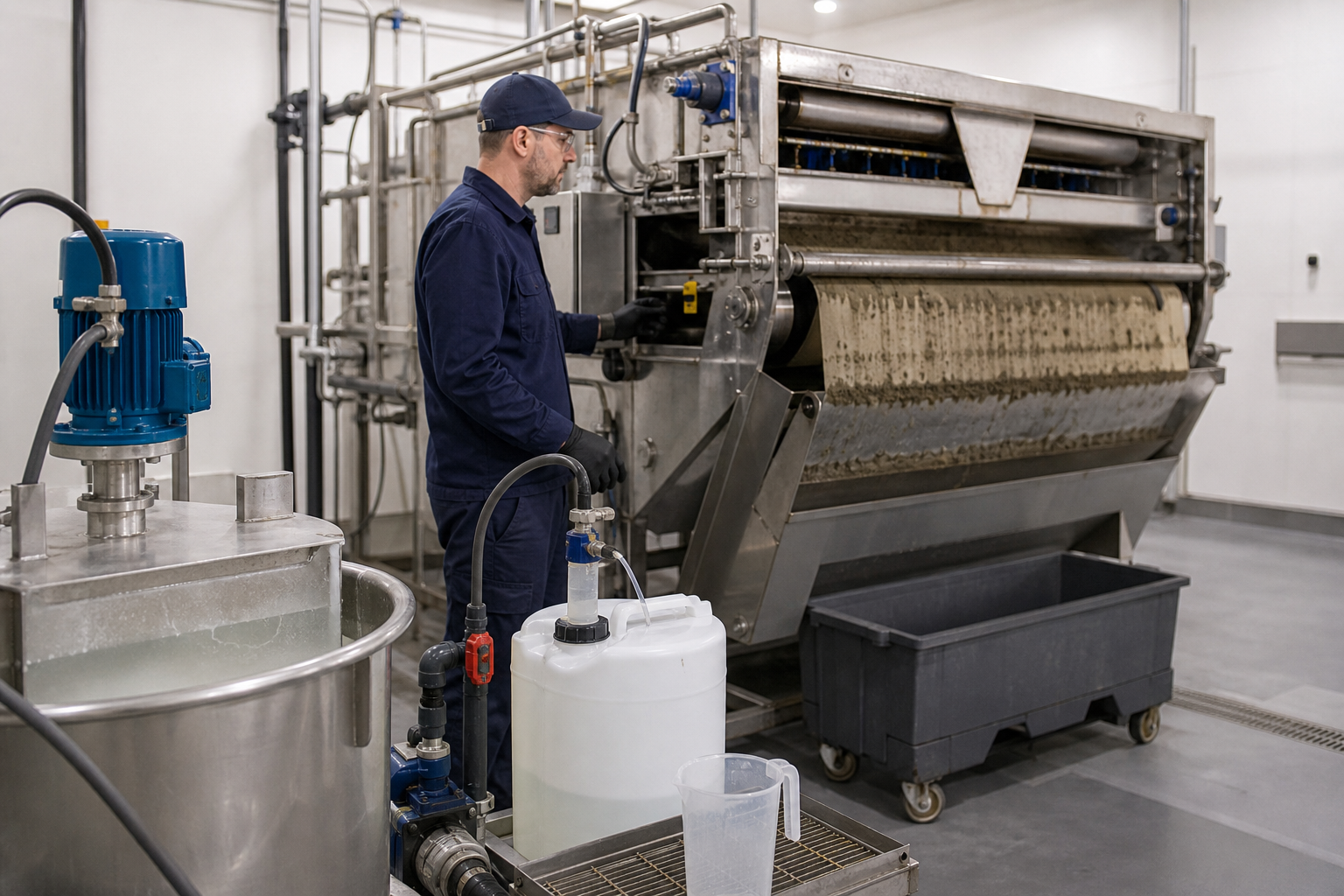
Dewatering PAM: Belt Press vs Centrifuge vs Screw Press
TL;DR Dewatering polymer selection depends on sludge type, solids concentration, shear history, machine geometry and the required cake or centrate result—not on product price per kilogram alone. Belt presses, centrifuges and screw presses create different mixing, drainage and retention conditions. Screen cationic polymer families with representative sludge, document preparation and addition, then compare the full program against agreed cake, capture and liquor criteria.
Which polymer is best for a belt press, centrifuge or screw press?
There is no machine-independent “best PAM.” A cationic polymer may be screened for many municipal and industrial sludges, but the useful choice depends on the actual sludge, mixing energy, polymer preparation, feed arrangement, machine geometry and acceptance outcome. Treat the device as part of the chemistry test: a stable floc in a beaker may break differently in a centrifuge, drain differently on a belt and behave differently across a screw-press screen. Compare total program evidence rather than an unqualified active-price claim.
| Equipment path | Trial condition to reproduce | Acceptance evidence to agree | Selection boundary |
|---|---|---|---|
| Belt press | Representative sludge, polymer make-down/ageing, injection and mixing point, belt drainage and compression settings. | Cake handling/solids target, filtrate quality, visible floc/drainage behaviour, polymer consumption and operability. | Do not carry an open-beaker floc ranking directly to belt drainage without a machine trial. |
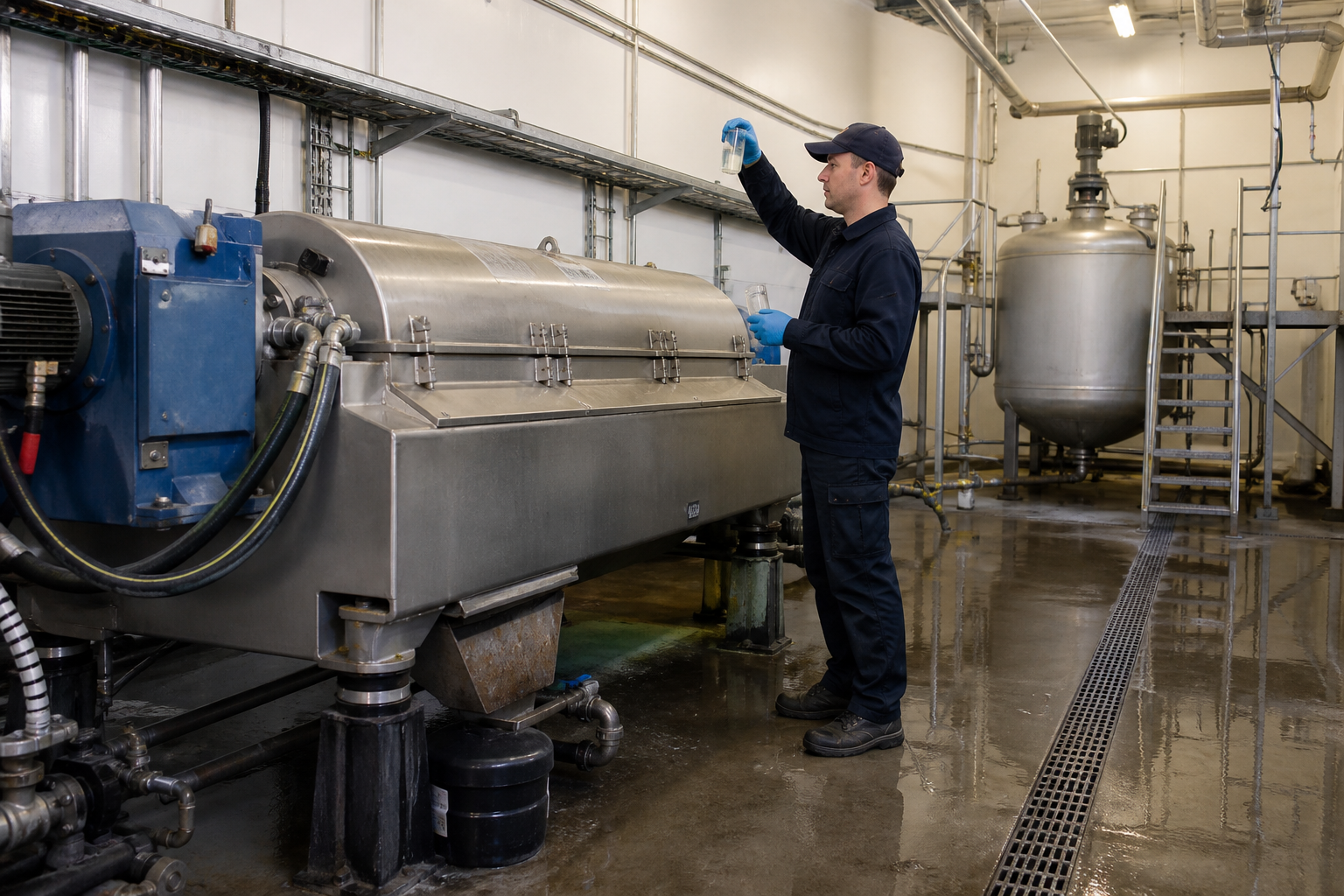
| Decanter centrifuge | Representative feed solids, polymer contact/mixing, feed flow and the relevant rotational/torque operating envelope. | Cake and centrate measures, capture or solids-loss method, torque/operability and polymer-program demand. | Shear and residence differ from other devices; a polymer result is equipment- and condition-specific. |
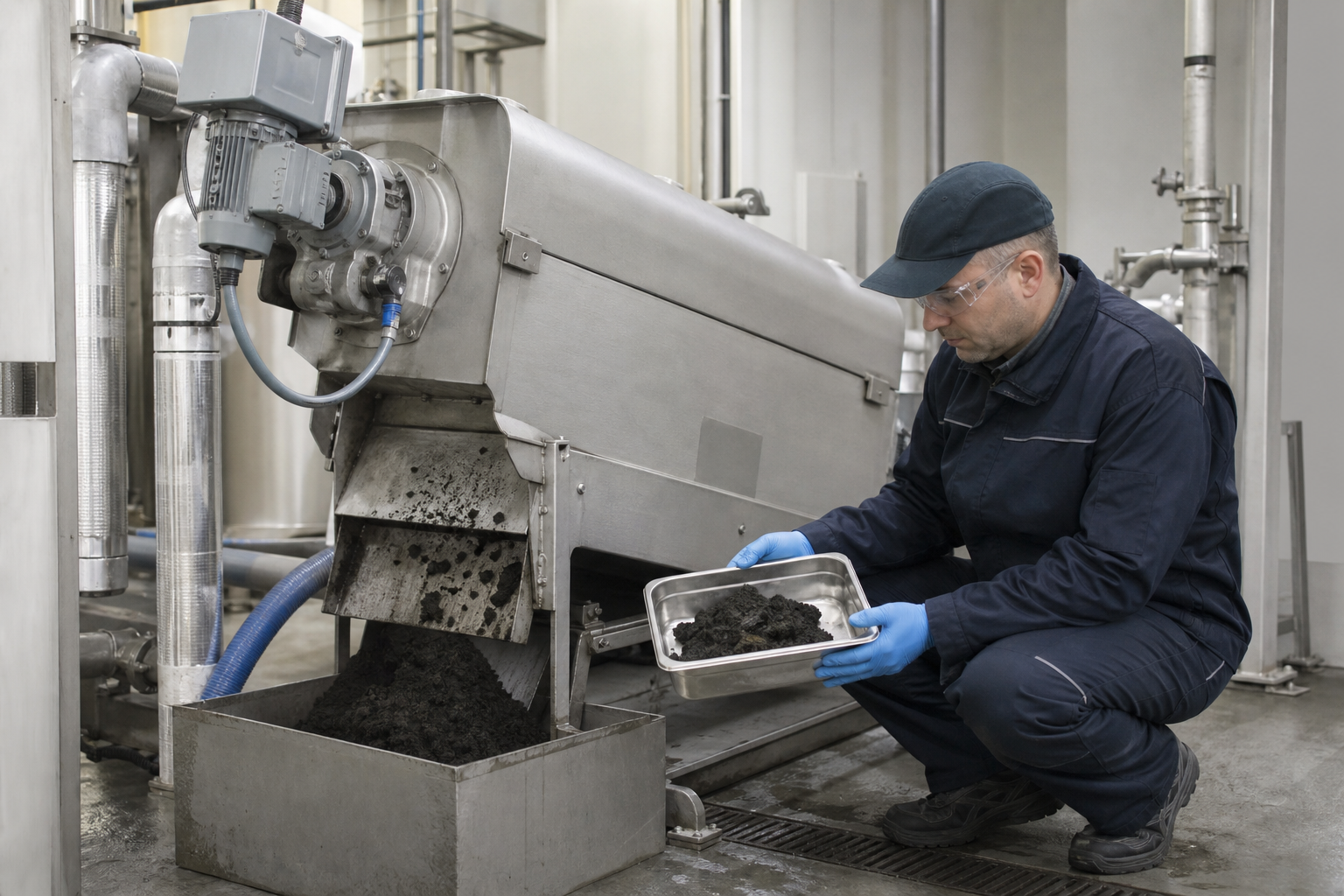
| Screw press | Representative sludge, conditioning, screen/press configuration and feed conditions that can reveal drainage or blinding behaviour. | Cake/filtrate criteria, screen condition, throughput/operability observations and polymer demand. | Do not assume screw-press screening behaviour equals a centrifuge or belt-press result. |
How does shear change dewatering polymer selection?
Shear can alter floc structure between polymer addition and separation. That is why the trial record must include where and how polymer is prepared, matured, diluted and mixed; what happens between addition and the machine; and what acceptance metric matters downstream. The EPA design manual warns against excessive sludge mixing and shear in dewatering-related handling. It supports a process question, not a fixed polymer dose, charge or molecular-weight rule. Keep the test as close as practical to the equipment path being purchased or operated.
| Trial variable | Record it with | Why it changes interpretation | Decision use |
|---|---|---|---|
| Sludge identity and solids | Source/process, date, total solids and conditioning history; note blending or seasonal variation. | Different solids and feed history can change polymer demand, drainage and capture. | Defines the valid sludge envelope for the result. |
| Polymer preparation | Emulsion/powder form, active basis if supplied, make-down water, dilution, ageing/maturation and addition point. | Poor preparation can look like poor polymer selection. | Makes a repeatable operating and procurement instruction. |
| Shear and contact path | Mixing arrangement, transfer route, pumps, feed point and device-specific operating condition. | Floc survival before separation can differ even at the same nominal dose. | Prevents cross-equipment extrapolation. |
| Cake and liquid outcome | Agreed cake/handling measure, filtrate or centrate method, solids capture/loss method and operating observations. | A dryer cake, clearer liquor or lower polymer use can trade off. | Allows total-program comparison rather than one attractive result. |
Dewatering PAM trial workflow
- Collect representative sludge. Record source, solids, conditioning and any blending. A one-off sample should not silently become a year-round guarantee.
- Define the outcome. Choose the agreed cake, liquid-quality/capture, operability and cost-accounting measures before screening candidates.
- Control make-down. Document polymer form, preparation water, dilution, maturation and feed point. Keep this consistent across candidates.
- Reproduce the separation path. Use a belt-press, centrifuge or screw-press trial—or a test specifically designed to preserve the relevant shear and drainage boundary.
- Compare the whole program. Review cake/filtrate or centrate evidence together with polymer demand, machine observations, washwater/handling implications and repeatability.
- Use conditional approval. Attach the valid sludge and machine envelope, product documents, monitoring method and re-trial triggers to the purchase release.
Procurement and trial acceptance checklist
- Sludge source, process history, total solids, sampling date, storage time and blending/conditioning changes.
- Equipment type, feed/mixing path, operating conditions relevant to the trial and any known shear/retention constraints.
- Candidate polymer form, charge family supplied for screening, COA/TDS/SDS, preparation method, dilution and maturation record.
- Pre-agreed cake, filtrate/centrate, capture/solids-loss, throughput/operability and total-program accounting methods.
- Replicate observations, test owner, acceptance decision, incoming-document check and change triggers for sludge or machine conditions.
Start with the coagulants and flocculants category, then review the PAM charge-type guide, polyacrylamide product information and the controlled test-workflow guide. Use technical inquiry to share representative sludge and acceptance data; the page does not prescribe a polymer dose, machine result or equipment guarantee.
Frequently asked questions
Which polymer is best for a belt press or centrifuge?
The best candidate is the one that meets the agreed cake, liquor/capture and operability criteria with representative sludge and a controlled preparation method on the actual equipment path. Belt presses and centrifuges impose different drainage and shear conditions, so a generic ranking or price-per-kilogram comparison is not enough.
How does machine shear affect dewatering polymer selection?
Shear can change floc structure between addition and separation. Record the mixing, pump/transfer route, contact time and machine condition, then test near the real device. A result from one equipment type should not be assumed to reproduce on another.
What should a sludge polymer trial record?
Record sludge source and solids, conditioning history, polymer form and preparation, make-down water, dilution and maturation, addition/mixing path, device conditions, cake and liquor methods, polymer-program demand, replicate observations and the acceptance decision. Include triggers for re-testing.
Are cationic polymers always required for sludge dewatering?
Many sludge trials screen cationic polymer families, but the appropriate chemistry and operating window depend on the sludge and equipment. Use controlled representative trials and product documentation; do not infer the correct charge, molecular weight or dose from a generic equipment label.
Why compare total program cost instead of polymer price?
A defensible comparison considers the agreed cake and liquid outcome, polymer demand, preparation, machine operation, handling and repeatability. A lower unit price may not represent the lower-cost program if it changes capture, throughput, labour or downstream handling.
About the author and evidence
VCYCLETECH Technical Team prepares application content from current public technical guidance, peer-reviewed or technical sources and product documentation. It does not certify facilities, turn generic images into site evidence, or provide a universal chemical dose, equipment result, compatibility guarantee or legal advice. Final decisions need representative site data, document review and site-specific verification.
References
- US EPA: sludge-dewatering design and excessive-shear boundary
- Water Environment Federation: dewatering technology overview
- Industry comparison: belt presses, centrifuges and screw presses (2026)
- Industry guidance: polymer conditioning and whole-program trial metrics
Related: Coagulants & flocculants · Jar-test guide · Polyacrylamide PAM · Technical inquiry