
Quote-Ready Water Treatment Chemical Supplier: System Data Checklist
A quote-ready water treatment chemical request should identify the process, water matrix, equipment and metallurgy, operating conditions, failure mode, document needs, packaging and trial criteria. A generic product name or country keyword is not enough for a defensible comparison. The supplier can only select a technically comparable chemistry when the duty and acceptance evidence are defined.
What data should you send before asking for a quote?
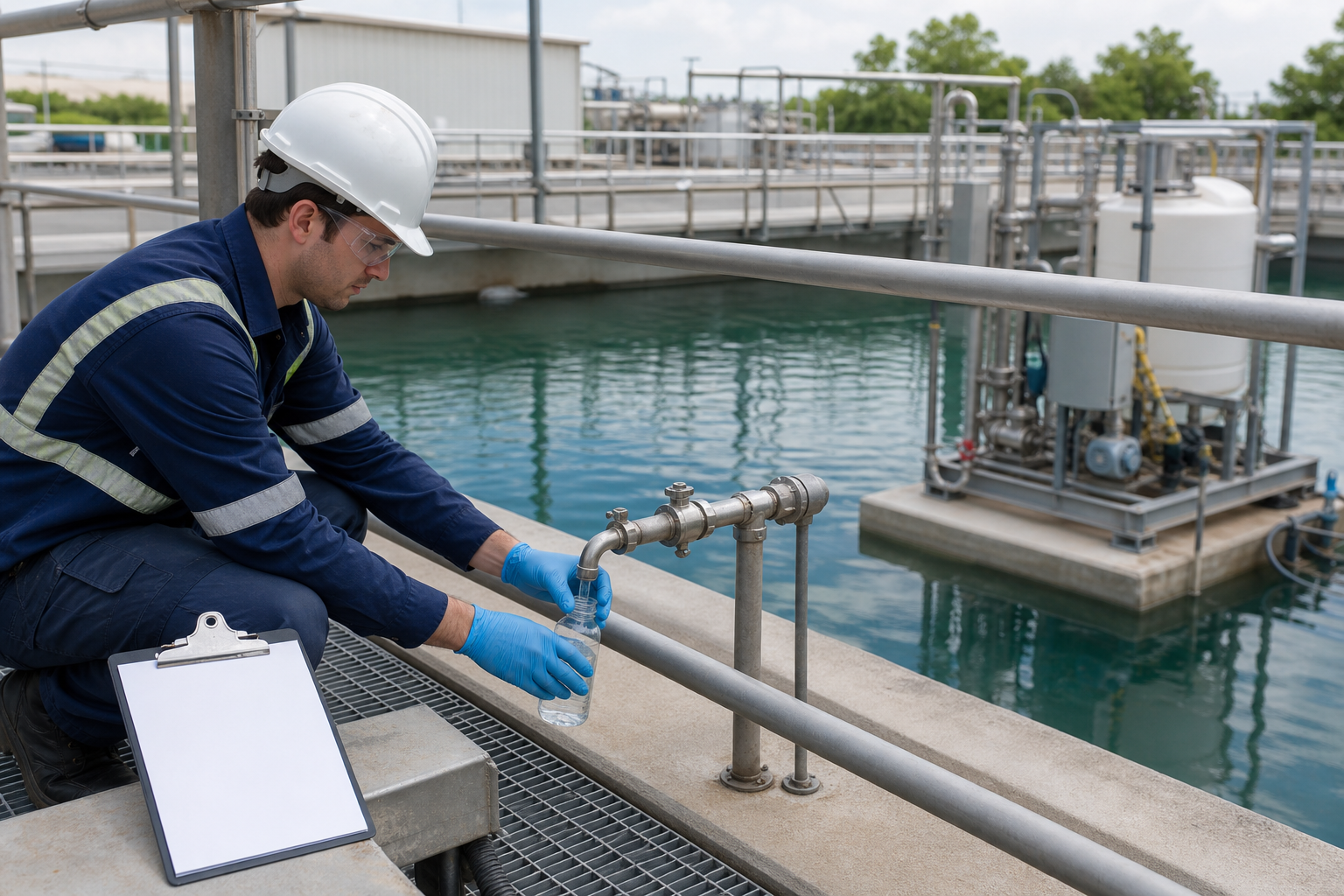
The fastest way to get a useful water treatment chemical supplier quote is to describe the duty before naming the chemistry. State whether the material is for cooling water, boiler water, RO pretreatment, wastewater, clarification, mining, oilfield water or another service. Add the point of injection, flow, temperature, pH, cycles or recovery, and the failure you need to control.
| Quote input | What to provide | Why it changes the offer | Evidence to request |
|---|---|---|---|
| Process and duty | Application, flow, injection point, process diagram and operating hours. | Defines the failure mode, contact time, feed method and treatment role. | Written basis of design and proposed use point. |
| Water matrix | Recent pH, conductivity, hardness, alkalinity, ions, TSS/turbidity, TOC/DOC and problem contaminants. | Controls compatibility, precipitation, adsorption, microbiology and dosage basis. | Analysis date, method, units, sample point and detection limits. |
| Equipment and metallurgy | Membranes, heat exchangers, pipes, coatings, elastomers and sensitive metals. | Limits corrosion, scaling, fouling and material-compatibility risk. | Compatibility statement bounded by pH, temperature and concentration. |
| Failure and target | Photos, trend data, current chemistry, cleaning history and measurable acceptance limit. | Separates a treatment change from a diagnosis problem. | Trial protocol, analytical method and pass/fail rule. |
| Documents and logistics | Destination, language, regulatory market, pack size, shelf life, delivery terms and label needs. | Changes SDS, transport, packaging, lead time and landed cost. | Current SDS, TDS, COA template, packaging drawing and lot traceability. |
COA vs TDS vs SDS vs sample: what each proves
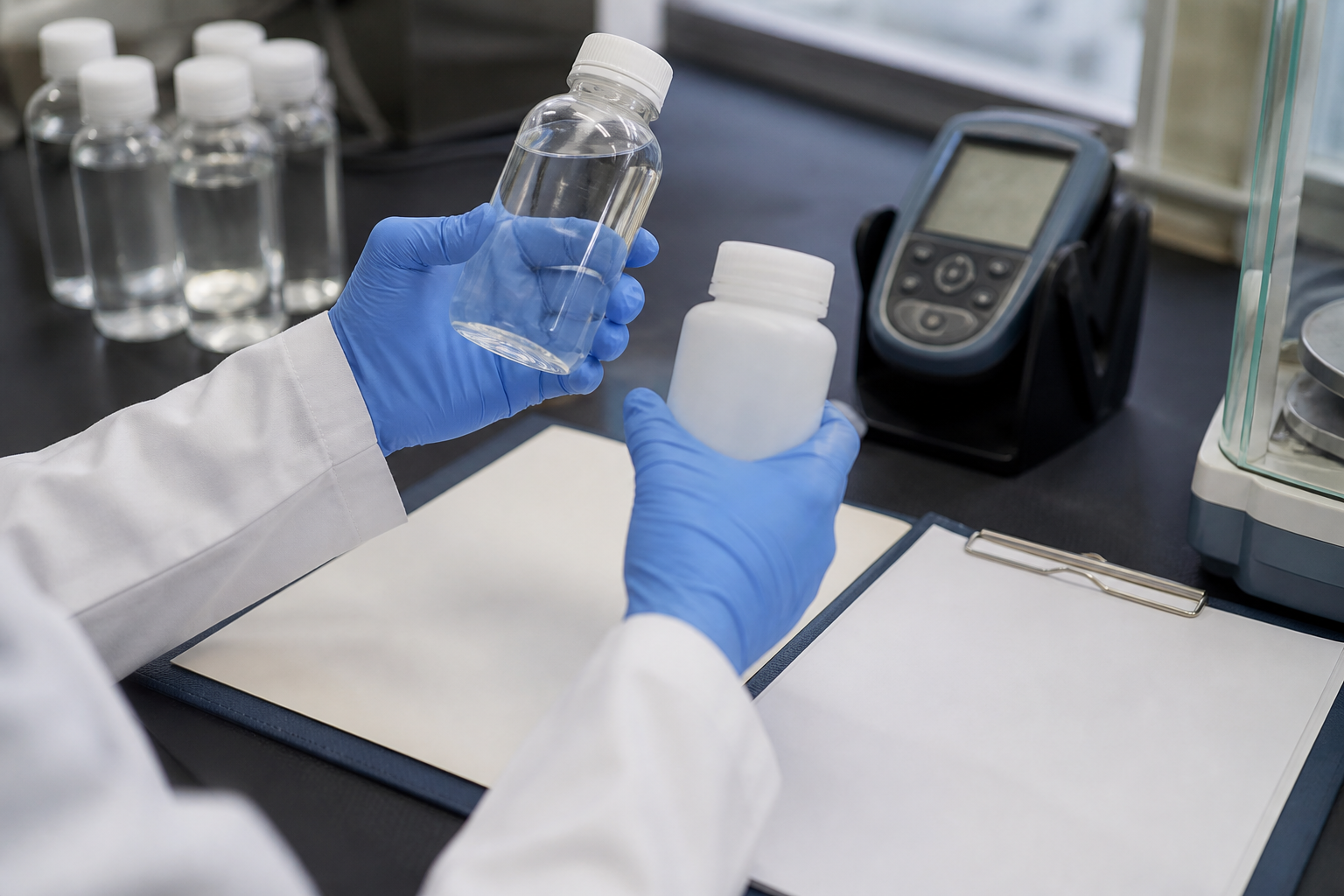
A COA is normally lot-specific evidence against stated tests; it is not a replacement for a technical specification. A TDS describes intended product properties, application guidance and test boundaries; it is not proof that every shipped lot meets a value. An SDS communicates hazards, handling, exposure controls, storage, transport and disposal information required by the applicable jurisdiction. ECHA explains that an SDS provides safe-use information for substances and mixtures, while OSHA’s Hazard Communication Standard uses a 16-section SDS format in the United States. Confirm which jurisdiction applies.
| Evidence | Question it answers | What it cannot prove |
|---|---|---|
| COA | Did this identified lot meet the listed release tests? | It does not prove site performance or substitute for the current TDS/SDS. |
| TDS/specification | What product family, properties and intended use are being offered? | It does not prove the current lot or universal removal/corrosion performance. |
| SDS | How should the material be classified, handled, stored and transported? | It is not a performance certificate or formulation disclosure in every case. |
| Sample/jar test | Does the proposed chemistry merit testing in this water and process? | It does not guarantee full-scale performance without scale-up controls. |
How a supplier should use the data
- Define the duty. Make the treatment objective measurable: for example, a turbidity target, corrosion coupon method, membrane differential-pressure trend or microbial-control endpoint.
- Normalize the comparison. Compare active basis, concentration, density, pack size, dosage basis, delivery terms and document scope—not just price per drum.
- Set the evidence plan. Agree on sample identity, test method, controls, dosage range, mixing, hold time, separation and acceptance criteria before the trial.
- Release and monitor. Match the shipped lot to the COA, keep the SDS/TDS revision current and compare field data with the agreed baseline.
Buyer-ready request template
Copy this short chemical quotation checklist into an inquiry:
Application and duty:
Flow / injection point / temperature:
Latest water analysis and sample date:
Equipment, metallurgy and elastomers:
Current chemistry and failure mode:
Target limit and test method:
Required sample size and trial window:
Pack size, destination and delivery term:
Required COA / TDS / SDS / label language:
Change-control and lot-traceability expectations:
For product-family context, see the water treatment chemicals manufacturer page, review quality and documentation information, and send the completed scope through the inquiry page. Depending on the duty, related product paths include coagulants and flocculants, RO chemicals, and biocide and algicide solutions. These links are starting points for a technical discussion, not a substitute for site data.
What to check before comparing offers
- Same active basis, concentration, dosage units and test method.
- Same packaging, net weight, shelf life, delivery term and destination.
- Current SDS and TDS revision; batch-specific COA requirements written into the order.
- Compatibility and regulatory questions tied to the actual water, temperature, materials and jurisdiction.
- Trial acceptance, change-control, complaint handling and lot-traceability terms.
Frequently asked questions
What data should I send a water-treatment chemical supplier?
Send the application, process flow, flow rate, injection point, current water analysis, operating conditions, equipment and metallurgy, current chemistry, failure mode, target limit, destination, packaging and required COA/TDS/SDS documents.
How do I request a water treatment chemical quotation?
Use a one-page technical brief: define the duty, attach representative water data, identify materials and the failure to control, then specify sample, trial, packaging, documentation, delivery and acceptance requirements. Ask suppliers to state active basis and dosage units.
Which documents should a supplier provide?
Usually request a current TDS, applicable SDS, product specification, batch COA or COA template, packaging and label information, and lot traceability. The exact document set depends on the product and destination jurisdiction.
Is a COA enough to approve a treatment chemical?
No. A COA addresses listed tests for an identified lot. It does not prove compatibility, site performance, regulatory suitability or full-scale results. Pair it with a current TDS/SDS and a matrix-matched trial or technical review.
What makes two chemical quotes comparable?
Normalize active concentration, dosage basis, test method, pack size, net delivered cost, documentation, shelf life, delivery terms and trial criteria. A lower drum price can be misleading when the products have different active bases or concentrations.
About the author and evidence
To narrow the available grades, share the industry, water or process conditions, treatment objective, current program, required quantity, packaging and destination. Representative sample results are helpful when performance depends on site water chemistry.
References
- ECHA: safety data sheets and safe-use information
- OSHA: Hazard Communication and SDS responsibilities
- HydroChemix: COA, SDS and buying checklist example
- WaterWorld: current supply-resilience market context
Related: Water treatment chemicals manufacturer · Quality and documentation · Technical inquiry