

How to Select a Cooling Tower Water Treatment Program from Water Analysis Data
TL;DR Select a cooling-tower water treatment program from representative makeup and recirculating-water data, operating cycles, temperature, metallurgy, microbial-control approach, deposits/corrosion history and discharge constraints—not from one conductivity number or a generic chemical recipe. Use the analysis to identify scale, corrosion and biofouling stress, then verify compatible product families and monitoring with current documents and a bounded site trial. The appropriate cycles, inhibitor type and operating targets are site-specific.
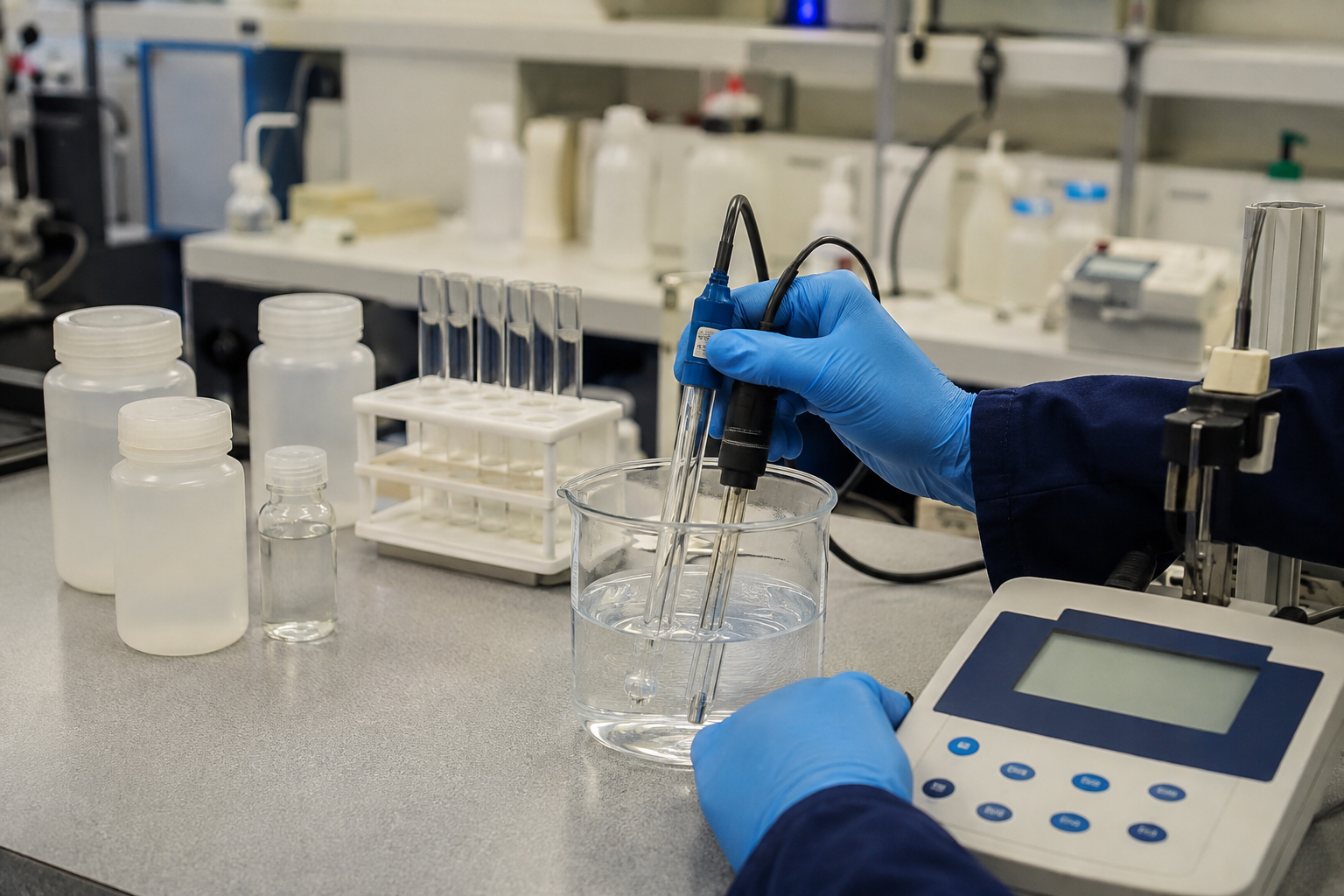
What water analysis is needed before selecting a cooling-tower program?
A credible program starts with representative samples and process context. Makeup water explains incoming load; recirculating water shows the water that equipment actually sees after evaporation and concentration. The U.S. Department of Energy identifies cycles of concentration as a core cooling-tower operating parameter and notes that water quality and treatment regime determine what a system can safely sustain. That is why an apparently simple conductivity ratio cannot decide an entire program on its own.
| Water or system input | What it helps assess | Program decision it informs | Boundary |
|---|---|---|---|
| Calcium/magnesium hardness, alkalinity, pH and temperature | Calcium-carbonate scale tendency and treatment stress. | Scale-inhibitor/dispersant screening, acid/alkalinity strategy and cycle review. | Use a representative matrix and operating temperature; no single number sets dosage. |
| Conductivity, chlorides, sulfate and silica | Concentration, salt loading, materials risk and scale constraints. | Blowdown/cycle-control investigation and metallurgy/chemical-compatibility review. | Local discharge and materials limits are not global program limits. |
| Iron, copper and suspended solids | Corrosion-product, fouling and under-deposit questions. | Filtration/dispersant path, coupon/deposit inspection and corrosion-control review. | Identify the source before attributing a metal trend to one chemical. |
| Microbiological observations and oxidant history | Biofilm/biofouling risk and oxidant compatibility context. | Biocide strategy, monitoring method and feed-point review. | Biocide selection must follow applicable product, safety and regulatory requirements. |
Translate the data into scale, corrosion and microbiological-control decisions
Do not buy three isolated chemicals. A cooling-water program is a coordinated control system. Scale risk comes from the concentration of dissolved minerals and the operating environment; corrosion risk combines water chemistry, metallurgy, oxygen/oxidant conditions, deposits and flow; microbiological risk changes with nutrients, temperature, residence, surfaces and biocide control. The DoD industrial-water manual similarly treats blowdown, silica/calcium constraints and treatment program as linked operating questions rather than a fixed chemical menu.
| Risk signal | Useful engineering question | Possible program lever to investigate | Evidence to retain |
|---|---|---|---|
| High scaling tendency after concentration | Which salts are controlling, at which temperature and cycles? | Cycle/blowdown control; scale inhibitor and polymer dispersant screening; source-water or pretreatment review. | Analysis, calculation basis, operating data, deposit identification and trial boundary. |
| Iron trend, coupon loss or under-deposit indication | Is the source corrosion, ingress, solids or an operational upset? | Metallurgy review; corrosion-inhibitor/dispersant path; solids management and coupon monitoring. | Coupon method, inspection, iron trend, deposit evidence and system changes. |
| Copper or brass in the circuit | Is yellow-metal protection compatible with oxidant and formulation? | Dedicated yellow-metal inhibitor compatibility review and monitoring. | Metallurgy map, oxidant record, product documents and current water data. |
| Slime, biological trend or loss of heat-transfer performance | What is the actual control method and where can biofilm persist? | Registered/appropriate biocide strategy, alternating/control review, cleaning and monitoring. | Sampling method, biocide history, applicable label/SDS and physical inspection. |
Cooling-tower program selection flow
- Map the system. Record tower type, recirculating volume, heat load profile, makeup source, blowdown arrangement, temperature, water losses, sidestream equipment and all wetted materials.
- Collect paired evidence. Take makeup and recirculating-water samples with sampling location, time, units, methods and operating state. Record current cycles from a suitable indicator, not an unexplained historical value.
- Identify the controlling constraint. Determine whether calcium/alkalinity, silica, salts, deposits, metallurgy, biological growth, local discharge conditions or an equipment limit governs the programme.
- Screen program families together. Consider scale inhibitor/dispersant, corrosion/yellow-metal protection and microbial-control approach together with the oxidant strategy. The exact formula and feed arrangement require technical compatibility review.
- Run an accountable trial. Set monitoring, document requirements, duration, operating envelope, acceptance observations and re-test triggers before implementation.
How should cycles and blowdown enter the decision?
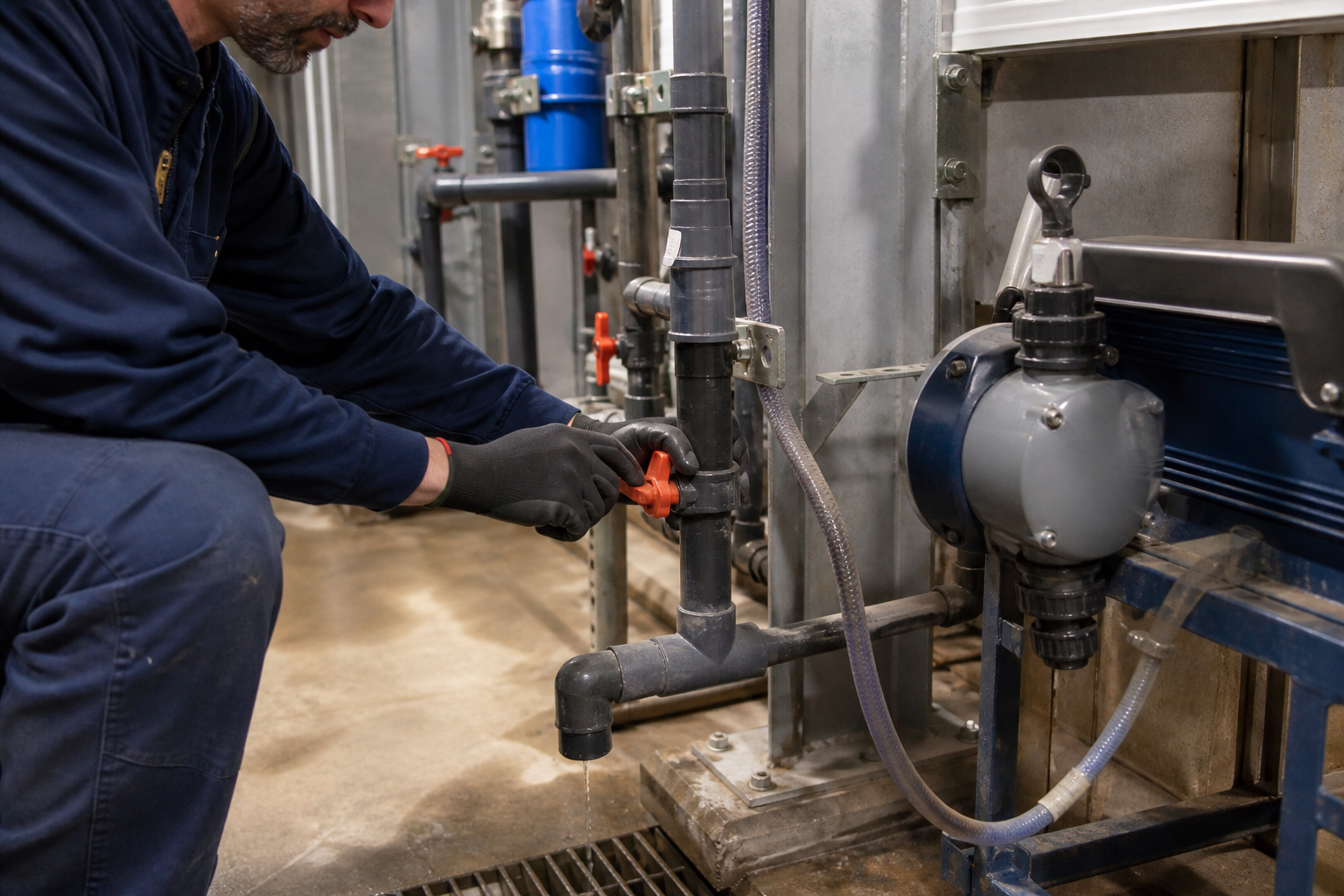
Evaporation leaves dissolved solids behind, so concentration cycles link water efficiency, scaling stress and blowdown. DOE describes conductivity-based control and flow measurement as useful operational tools and notes that the attainable cycle count depends on makeup water and treatment regimen. Use that as an operating principle—not a global mandate to run a particular number of cycles. Confirm the material, mineral, microbiological and discharge boundaries for the local system before changing a conductivity setpoint or chemical program.
Data package for a technical review or RFQ
- Makeup and recirculating-water analysis: pH, conductivity, hardness, alkalinity, silica, chloride, sulfate, iron, copper where relevant, temperature and site-specific contaminants.
- Operating record: cycles basis, makeup/blowdown flow or controller record, temperature/load profile, oxidant/biocide history and observed upsets.
- System record: metallurgy, tower/heat-exchanger configuration, water losses, filtration, dead legs, deposit/corrosion history and cleaning history.
- Commercial/document request: treatment objective, applicable discharge constraints, current product-specific TDS/COA/SDS request, packaging/handling needs and trial acceptance criteria.
Continue with the cooling-water treatment application, phosphonate selection hub, PBTC product context, HEDP product context and the cooling-tower KPI dashboard. The video library can provide visual context, but it is not program evidence. Send the data package for a technical review; suitability, documents and any trial scope must be confirmed for the actual system.
Frequently asked questions
What is the first water test for a cooling-tower treatment program?
Start with paired, representative makeup and recirculating-water samples and a system map. Include pH, conductivity, hardness, alkalinity, silica, chloride, sulfate, metals where relevant, temperature, cycles basis, oxidant history and observed scale/corrosion/biofouling evidence.
Can conductivity alone set cooling-tower cycles?
No. Conductivity is useful for concentration and blowdown control, but the safe operating envelope also depends on minerals, silica, metallurgy, temperature, treatment program, deposit history, microbiological control and local discharge conditions. Confirm a site-specific basis before changing a setpoint.
How do I choose scale inhibitor, corrosion inhibitor and biocide together?
Treat them as a compatible programme. Use the water matrix and cycles to frame scale stress, metallurgy and deposit evidence to frame corrosion protection, and microbial/oxidant history to frame biological control. Then confirm product compatibility, documents, safety/regulatory requirements and monitoring in a bounded trial.
What data should be sent with a cooling-water chemical RFQ?
Provide current makeup and recirculating analysis, tower configuration and metallurgy, operating temperature/load, cycles/blowdown basis, current chemistry and oxidant history, deposits/corrosion/biofouling observations, treatment objective, document requirements and applicable discharge constraints.
Why is a water-treatment trial still needed after water analysis?
Analysis frames the risk and narrows chemical families, but it cannot reproduce every hydraulic, thermal, surface, deposit, feed-point and operational variable. A bounded trial with agreed monitoring and change control helps verify the actual product/system combination without turning a generic recommendation into a guarantee.
About this technical guide
VCYCLETECH Technical Team prepares this application guidance from cited technical and industry sources. Apply it to representative site data and current information for the exact candidate product; final program choices require qualified site-specific review.