
Coagulatieproblemen bij industrieel afvalwater: bepaal de oorzaak
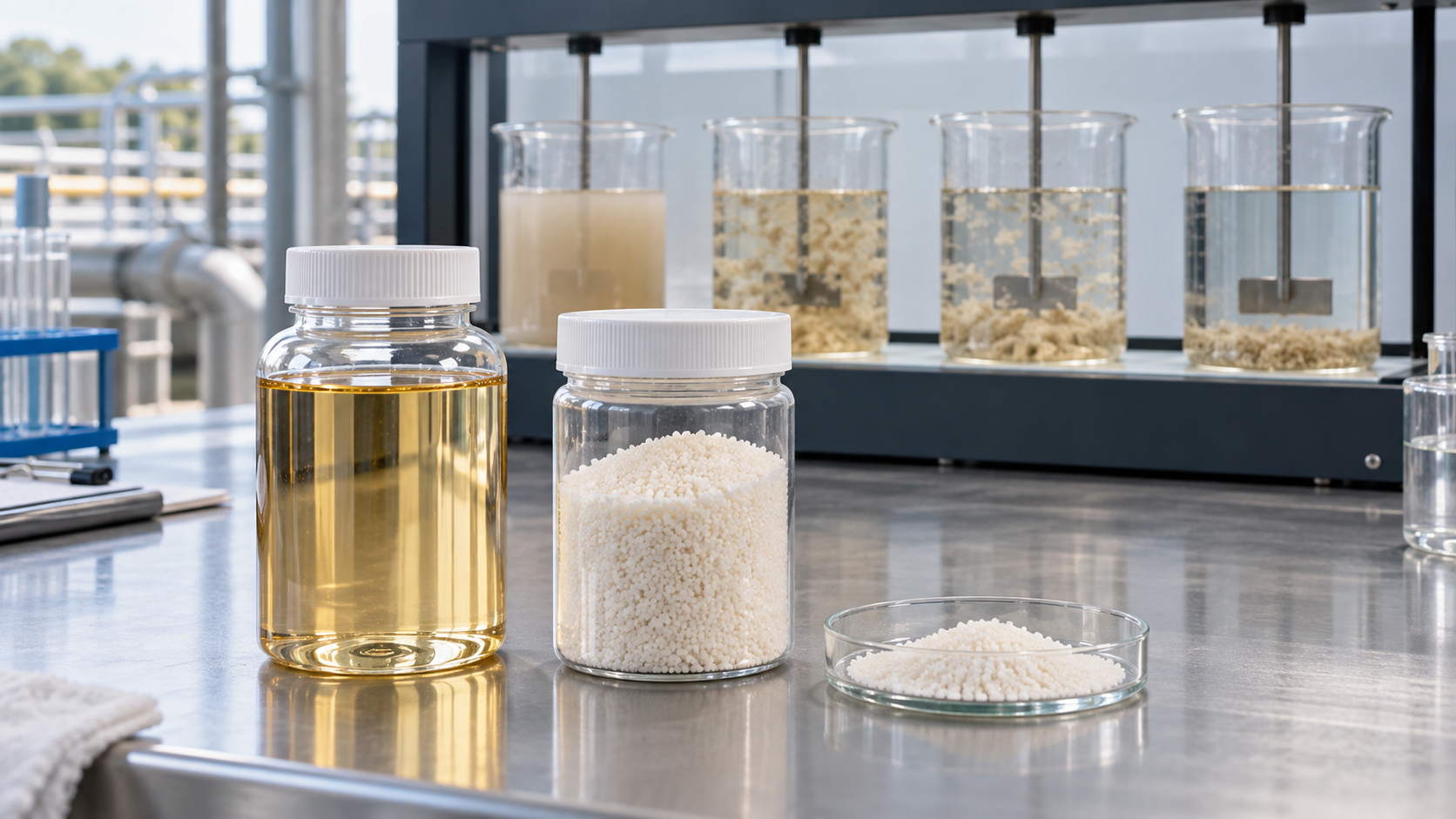
Kort samengevat Werkt de coagulatie minder goed, bepaal dan eerst bij welke processtap het resultaat verslechtert voordat u meer chemicaliën doseert. Vergelijk onbehandeld afvalwater met monsters na de snelmenging, uitvlokking en bezinking of flotatie. Controleer de pH, alkaliteit, vaste stoffen en de werkelijk toegevoegde hoeveelheid middel en voer vervolgens een bekertest voor coagulatie en vlokvorming uit met hetzelfde afvalwater en een duidelijk beoordelingscriterium. Als de bekertest wel verbetering laat zien maar het effluent van de installatie niet, controleer dan de werkelijke dosering, de afschuiving van de vlokken en de afscheidingsstap. Als beide niet slagen, onderzoek dan de middelen en de doseringsvolgorde met het actuele afvalwater. Gebruik de vergelijking om een proef met polyaluminiumchloride (PAC) of een polymeer te kiezen en vast te leggen welk resultaat de behandeling moet halen.
Waar begint u als vlokken zwakker worden of het effluent troebel blijft?
Begin met het symptoom dat voor uw installatie van belang is: zwakke vlokken, restkleur in het effluent, toenemende troebelheid, wisselende CZV-verwijdering of problemen bij de slibverwerking. Vergelijk de huidige water- en bedrijfsomstandigheden met een stabiele bedrijfsperiode en stel vervolgens vast of de verandering begint bij de dosering van chemicaliën, snelmenging, vlokvorming of afscheiding. Dat vertelt u of u de bestaande installatie moet aanpassen of een andere combinatie van coagulatiemiddel en vlokmiddel moet beproeven.

Koppel elk symptoom aan de juiste processtap
| Waargenomen symptoom | Controleer het volgende | Zinvolle volgende stap |
|---|---|---|
| Geen zichtbare vlokken en blijvende troebelheid | pH van het influent, alkaliteit, temperatuur, geleidbaarheid, kleur/troebelheid, werkelijk debiet van de doseerpomp, productidentiteit en bekertest waarbij telkens één variabele verandert. | Controleer de waterchemie en de werkelijk gedoseerde hoeveelheid middel voordat u een ander coagulatiemiddel beproeft. |
| Er ontstaan vlokken, maar daarna breken ze in kleine vlokken uiteen | Mengintensiteit en tijd per fase, doseerpomp en injectiepunt, afschuiving tijdens het transport, recyclestromen en vlokwaarnemingen voor en na elke processtap. | Controleer het mengen en de afschuiving tijdens het transport voordat u het primaire coagulatiemiddel verwisselt. |
| Vlokken ontstaan, maar komen toch in het effluent terecht | Bezinkings- of flotatiegedrag, oppervlaktebelasting, slibdeken, recycle-/luchtomstandigheden, aanwijzingen voor hydraulische kortsluitstromen en belasting met zwevende stoffen. | Bekijk de hydraulica van de afscheider en de belasting met zwevende stoffen naast de chemische behandeling. |
| De kleur neemt af, maar de CZV-doelwaarde wordt niet gehaald | CZV van gefilterde en ongefilterde monsters of andere goedgekeurde fracties, kleurmethode, context van oplosbaar versus deeltjes en rol van de stroomafwaartse behandeling. | Vergelijk CZV-fracties en het stroomafwaartse behandelingsdoel afzonderlijk van kleur. |
| Een hogere dosis maakt de prestaties slechter | Herhaalde dosis-responsproeven, pH en alkaliteit na behandeling, restconcentratie of ladingsmeting indien geldig, slibvolume en bereidingskwaliteit. | Gebruik een volledige dosis-responscurve en uiteindelijke pH om de mogelijke mechanismen te onderscheiden. |
Kleur, troebelheid en CZV beantwoorden verschillende vragen
| Meetpunt | Wat dit meet of laat zien | Hoe het resultaat te gebruiken |
|---|---|---|
| Kleur | De gedefinieerde schijnbare of ware kleurmeting en de verandering ervan door behandeling. | Gebruik dezelfde kleurmethode en filtratiestatus op beide monsters; beoordeel de CZV apart. |
| Troebelheid | Lichtverstrooiing van gesuspendeerd of colloïdaal materiaal onder de gekozen methode. | Combineer troebelheid met waarnemingen van vaste stoffen of deeltjes bij het selecteren van een aanpassing. |
| CZV | Oxideerbare belasting gemeten volgens een gedefinieerde analytische methode. | Rapporteer de opgeloste en deeltjesgebonden fracties om de stroomafwaartse stap te kiezen. |
| Vlokwaarneming | Groei-, kracht-, bezinkings- of drijfgedrag over een gedocumenteerde reeks. | Koppel vlokvorming aan de doelen voor behandeld water en slibverwerking. |
Vergelijk metingen onder dezelfde omstandigheden
Trendgegevens zijn alleen nuttig als de monsterlocatie, het verzameltijdstip, de bewaring, de filtratiestatus en de analysemethode zijn vastgelegd. Een kleurresultaat genomen op gefilterd supernatant kan niet rechtstreeks worden vergeleken met een ongefilterd monster uit de installatie; dezelfde voorzichtigheid geldt voor CZV-fracties en troebelheidsmetingen die worden beïnvloed door bezinkingstijd of het meeslepen van vlokken. Registreer detectielimieten, verdunning en elke monsterbehandeling die de matrix verandert. Als het influent zeer variabel is, gebruik dan herhaalde of samengestelde monsters die aansluiten bij de werkwijze van de installatie, in plaats van één steekmonster als representatief voor de hele bedrijfsperiode te behandelen. Deze controles maken de volgende bekertest en beoordeling van de installatierespons reproduceerbaar.
Van monstername tot gerichte aanpassing
- Bevries de tijdlijn. Registreer productierecept, afvalwaterbron, stroom, recycling, pH-aanpassing, hoeveelheid coagulant/polymeer, voorbereidingsbatch en apparatuurwijzigingen voordat u het instelpunt aanraakt.
- Gebruik benoemde monsterpunten. Paar influent, na de snelmenging, na uitvlokking en geklaard of drijvend effluent. Registreer tijd, temperatuur, filtratiestatus, conservering en methode zodat de resultaten kunnen worden vergeleken.
- Controleer de levering. Bevestig het juiste product, de bruikbare opslagconditie, de aanvulling of verdunning, de pompkalibratie, de kleppen, het injectiepunt en het daadwerkelijke stroomtempo. Een voorgeschreven voedingssnelheid is geen bewijs van geleverde actieve chemie.
- Screen één variabele tegelijk. De EPA-richtlijnen behandelen bekertesten als een locatiespecifieke simulatie: representatief monster, gecontroleerd mengen, pH/alkaliteit en gedefinieerd eindpunt zijn nuttiger dan het kopiëren van het recept van een andere plant.
- Scheid chemie van afscheiding. Observeer waar de vlok het eerst verzwakt. Een probleem met een zuiveringsinstallatie, een DAF-eenheid, een filter of een recycleproces kan een goede werkbankchemie behouden, maar er gaan vaste stoffen in de fabriek verloren.
- Definieer de beslissingspoort. Vermeld de criteria voor behandeld water, slib, bruikbaarheid en herhaalbaarheid voordat een aanpassing wordt geaccepteerd. Controleer opnieuw na een representatieve bedrijfstijd.

Welke gegevens helpen bij de keuze van de volgende proef?
| Inclusief | Waarom het ertoe doet |
|---|---|
| Gedateerde analyses van influent en effluent | Verbindt het symptoom met de werkelijke samenstelling van het afvalwater en goedgekeurde methoden. |
| Processchema en namen van monsterpunten | Laat zien waar snelmenging, uitvlokking en afscheiding kunnen uiteenlopen. |
| Chemische identiteit, TDS/SDS/COA en partijgeschiedenis | Helpt bij productidentificatie, veiligheid en traceerbaarheid; bewijst geen werking in uw afvalwater. |
| Registratie van aanmaak, dosering en kalibratie | Laat zien of het middel correct is aangemaakt en op de geplande plek is gedoseerd. |
| Protocol en volledige resultaten van de bekertest | Maakt vergelijking van monster, volgorde, pH, menging en eindresultaat mogelijk, ook voor proeven die het doel niet haalden. |
| Installatierespons en acceptatiecriterium | Scheidt een tijdelijke visuele verbetering van een herhaalbare procesbeslissing. |
Vergelijk coagulatiemiddelen en polymeren in het assortiment coagulatiemiddelen en vlokmiddelen en raadpleeg de toepassingspagina voor afvalwaterbehandeling om per optie de passende behandelingsstap te bepalen. De video over PAC + PAM toont de volgorde in een bekertest voor coagulatie en vlokvorming. Stuur uw afvalwateranalyse, huidige middelen en afscheidingsdoel om een proef met uw afvalwater te plannen.
Veelgestelde vragen
Waarom vormt mijn afvalwater geen vlokken?
Mogelijke oorzaken zijn onder meer een veranderde samenstelling van het afvalwater, een ongeschikte pH of alkaliteit, een verkeerd middel of een fout in de dosering, een onjuiste aanmaak van het middel, een ontoereikende snelmenging, een verkeerde volgorde, een ongeschikt polymeer of storende verontreinigingen. Controleer elke mogelijke oorzaak met representatieve monsters en gecontroleerde tests in plaats van de dosis op basis van aanname te verhogen.
Hoe onderscheid ik een coagulatieprobleem van een probleem in de nabezinker?
Vergelijk een representatieve bekertest met monsters en observaties op meerdere procespunten. Als de gecontroleerde bekertest slaagt, maar de afscheiding in de installatie mislukt, controleer dan de werkelijk gedoseerde hoeveelheid middel, de hydraulica, de afschuiving, de slibdeken en de bezinkings- of flotatieomstandigheden. Als beide op dezelfde manier falen, onderzoek dan de samenstelling van het afvalwater, pH, middelen en doseringsvolgorde.
Betekent hoge troebelheid na coagulatie altijd onderdosering?
Nee. Hoge troebelheid kan het gevolg zijn van onderdosering, overdosering, pH- of alkaliteitsverschuiving, slechte menging, vlokbreuk, hydraulisch meeslepen van vlokken, overbelasting met zwevende stoffen of een ongeschikt beoordelingscriterium. Er is een gedocumenteerde dosis-responsproef en monsters van meerdere procespunten nodig.
Kan coagulatie alle CZV uit afvalwater verwijderen?
Een algemeen antwoord is niet mogelijk. Coagulatie kan onder gedefinieerde omstandigheden een deeltjesvormige of colloïdale fractie worden verwijderd, terwijl opgelost oxideerbaar materiaal achterblijft. Gebruik de goedgekeurde CZV-methode, filtratiecondities en stroomafwaartse behandelingsdoelstelling om het resultaat te interpreteren.
Welke gegevens moet ik verzenden voordat ik coagulatiemiddel of polymeer vervang?
Stuur gedateerde analyses van influent en effluent, de afvalwaterherkomst en het verloop van de procesverandering, de debieten en recirculatiecondities, de monsterpuntkaart, de chemische identiteit en partijdocumenten, registraties van aanmaak en dosering, bekertestmethode en -resultaten, apparatuurbeperkingen en vooraf overeengekomen acceptatiecriteria.
Wie deze gids heeft opgesteld
Opgesteld door het technisch team van VCYCLETECH. Vergelijk productopties met uw eigen water-, apparatuur- en bedrijfsdoelen; gebruik actuele productdocumentatie en een representatieve proef om de definitieve keuze te bevestigen.
Bronnen
- US EPA Nutrient Control Design Manual: locatiespecifieke bekertests en gecontroleerde variabelen
- US EPA Office of Water: bench-/pilottesten en opschalingsgrens
- HydroChemix peer guide: huidige structuur voor probleemoplossing herzien, geen bewijs van universele instellingen
- Water & Afvalwater Azië 2026: huidige industriële hergebruik- en voorbehandelingscontext