
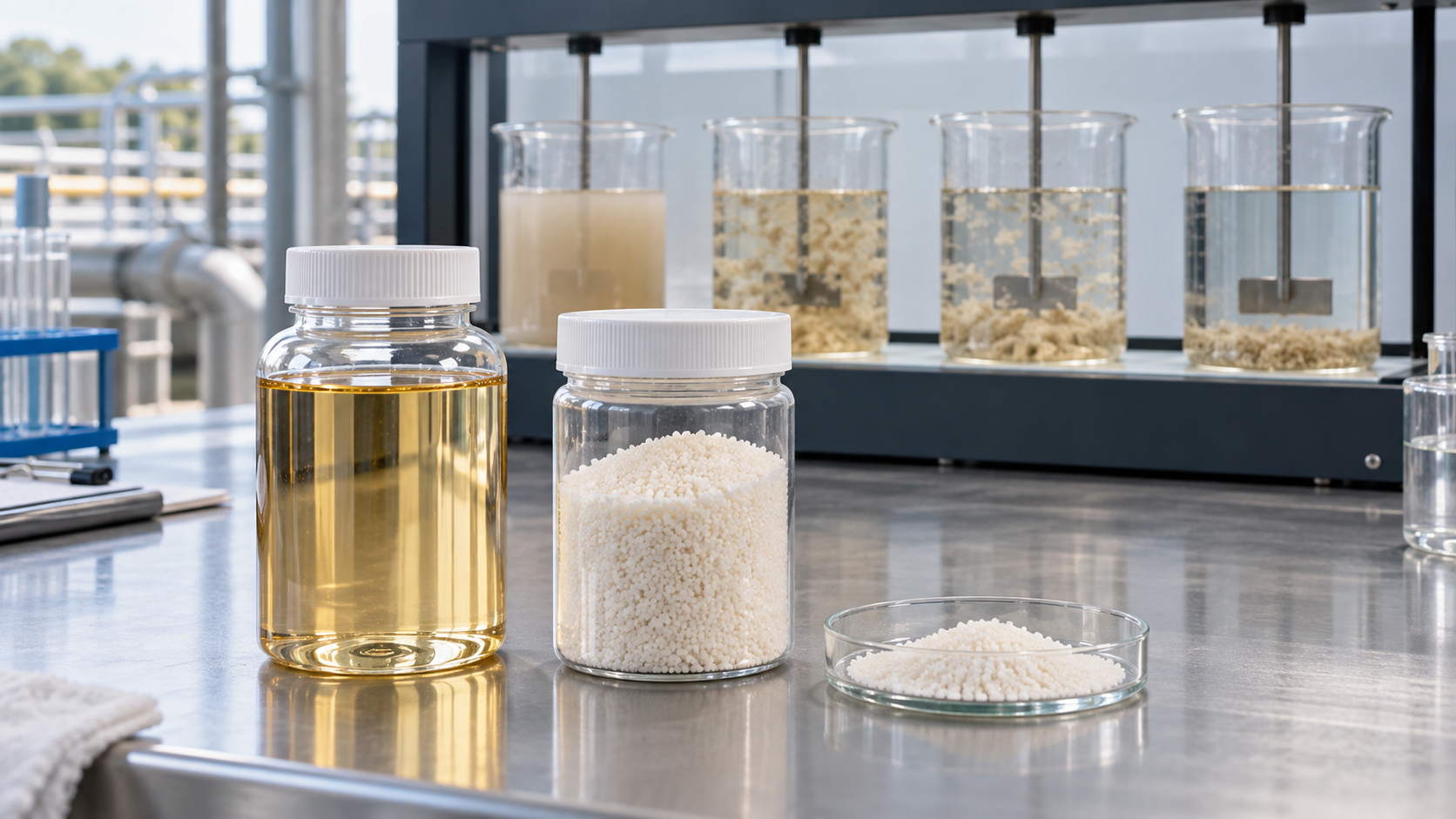
Fallo de coagulación de aguas residuales industriales: encuentre la causa
En resumen Cuando falla la coagulación de aguas residuales industriales, identifique la primera etapa en la que cambió el resultado antes de aumentar la dosificación de químicos de tratamiento. Compare el agua cruda con muestras después de la mezcla rápida, floculación y clarificación o flotación. Verifique el pH, la alcalinidad, los sólidos y la dosificación real del reactivo, luego realice una prueba de coagulación y floculación en el laboratorio con la misma agua residual y un criterio de evaluación definido. Si el ensayo de laboratorio mejora el agua, pero el efluente de la planta no, revise la dosificación del reactivo, el cizallamiento y la unidad de separación. Si ambos fallan, revise la compatibilidad de los reactivos y su secuencia de adición con el agua actual. Utilice la comparación para elegir el siguiente ensayo con PAC o polímero y definir qué resultado debe alcanzar.
Por dónde empezar si empeoran los flóculos o la claridad
Comience con el síntoma que importa en su planta: flóculo débil, arrastre de color, turbidez creciente, eliminación inestable de DQO o dificultades para manejar los lodos. Compare el agua actual y las condiciones operativas con un funcionamiento normal, luego identifique si el cambio comienza en la dosificación de reactivos, mezcla rápida, crecimiento de flóculos o separación. Eso le indica si debe ajustar el proceso instalado o ensayar otra combinación de coagulante y floculante.

Relacione cada síntoma con la etapa del proceso
| Síntoma observado | Qué revisar después | Siguiente decisión útil |
|---|---|---|
| No se forman flóculos y persiste la turbidez | pH del afluente, alcalinidad, temperatura, conductividad, color/turbidez, caudal real de la bomba dosificadora, identidad del producto y ensayo de jarras variando un factor por vez. | Verifique la química del agua y la dosificación efectiva del reactivo antes de ensayar otro coagulante. |
| Se forman flóculos al inicio, pero después se debilitan o se rompen | Intensidad y tiempo de mezcla por etapa, bomba dosificadora y punto de inyección, cizallamiento durante el traslado, corrientes de reciclaje y observaciones de flóculos antes y después de cada etapa. | Verifique la mezcla y el cizallamiento durante el traslado antes de cambiar el coagulante primario. |
| Se forman flóculos, pero pasan al efluente | Comportamiento de sedimentación o flotación, carga superficial, manto de lodos, condiciones de aire/reciclaje, indicios de cortocircuito hidráulico y carga de sólidos. | Revise la hidráulica del separador y la carga de sólidos junto con el tratamiento químico. |
| Mejora el color, pero no se alcanza el objetivo de DQO | DQO filtrada/sin filtrar u otras fracciones aprobadas, método de color, contexto de soluble versus partículas y función del tratamiento posterior. | Compare las fracciones de DQO y el objetivo de tratamiento posterior por separado del color. |
| Una dosis más alta empeora el rendimiento | Curva dosis-respuesta replicada, pH/alcalinidad final, evidencia de carga o residual cuando sea válida, volumen de lodo y calidad de la preparación. | Utilice una curva de respuesta completa y un pH final para distinguir los posibles mecanismos. |
Color, turbidez y DQO responden a diferentes preguntas
| Indicador | Qué indica | Cómo utilizar el resultado |
|---|---|---|
| Color | La medida definida del color aparente o verdadero y su cambio a través del tratamiento. | Utilice el mismo método de color y estado de filtración en ambas muestras; evalúe la DQO por separado. |
| turbidez | Respuesta de dispersión de luz del material suspendido o coloidal según el método elegido. | Combine la turbidez con observaciones de sólidos o partículas al seleccionar una corrección. |
| DQO | Carga oxidable medida mediante un método analítico definido. | Informe las fracciones disueltas y particuladas para elegir el paso aguas abajo. |
| Observación de flóculos | Crecimiento, resistencia, sedimentación o flotación a través de una secuencia documentada. | Conecte las observaciones de flóculos con objetivos de manejo de lodos y agua tratada. |
Compare muestras obtenidas con el mismo método
Los datos de tendencias son útiles sólo cuando la ubicación de la muestra, el tiempo de recolección, la conservación, el estado de filtración y el método analítico permanecen visibles. Un resultado de color obtenido de un sobrenadante filtrado no debe compararse directamente con una muestra de planta sin filtrar; La misma precaución se aplica a las fracciones de DQO y lecturas de turbidez afectadas por el tiempo de sedimentación o el arrastre. Registre los límites de detección, la dilución y cualquier tratamiento de muestra que cambie la matriz. Cuando el afluente es muy variable, utilice evidencia repetida o compuesta apropiada para el procedimiento de la planta en lugar de tratar una muestra puntual como representativa de toda la operación. Estos controles hacen que la siguiente prueba de coagulación y floculación del laboratorio y la revisión de la respuesta de la planta sean reproducibles.
Del muestreo al ajuste del tratamiento
- Anote la secuencia de cambios. Registre la receta de producción, el origen del agua residual, el caudal, la recirculación, el ajuste de pH, el lote de coagulante/polímero, la preparación del reactivo y los cambios de equipo antes de cambiar la consigna de dosificación.
- Defina los puntos de muestreo. Tome muestras pareadas del afluente, después de la mezcla rápida, la floculación y la clarificación o flotación. Registre el tiempo, la temperatura, el estado de filtración, la conservación y el método para poder comparar los resultados.
- Compruebe la dosificación. Confirme el producto correcto, las condiciones de almacenamiento utilizables, la preparación o dilución, la calibración de la bomba, las válvulas, el punto de inyección y el caudal real de dosificación. El valor programado en la bomba no demuestra que el reactivo llegue al punto de aplicación.
- Evalúe una variable por vez. La guía de la EPA trata las pruebas de coagulación y floculación de laboratorio como una simulación específica del sitio: una muestra representativa, una mezcla controlada, el pH y la alcalinidad y un punto final definido son más útiles que copiar la receta de otra planta.
- Separe las causas químicas de los problemas de separación. Observe dónde se debilita primero el flóculo. Un problema en el clarificador, la unidad DAF, el filtro o el reciclaje puede conservar un buen resultado en el laboratorio pero perder sólidos en la planta.
- Fije los criterios de decisión. Indique los criterios de agua tratada, lodos, operabilidad y repetibilidad antes de aceptar una corrección. Vuelva a comprobar después del tiempo de funcionamiento representativo.

Datos para elegir el siguiente ensayo químico
| Datos útiles | Por qué es importante |
|---|---|
| Análisis fechados del afluente y del agua tratada | Relaciona el síntoma con la matriz de agua real y los métodos aprobados. |
| Mapa de procesos y nombres de puntos de muestra | Muestra dónde pueden divergir la mezcla rápida, la floculación y la separación. |
| Identidad química, TDS/SDS/COA e historial de lotes | Apoya la identidad, la seguridad y la trazabilidad; No sustituye un ensayo con el agua de la planta. |
| Registro de preparación, dosificación y calibración | Permite comprobar si el reactivo llegó al punto correcto en una forma utilizable. |
| protocolo de prueba de coagulación y floculación de laboratorio y resultados brutos | Permite comparar muestras, secuencias, pH, mezcla y punto final sin omitir los ensayos que no funcionaron. |
| Respuesta de la planta y objetivo de tratamiento | Separa una mejora visual temporal de una decisión de proceso repetible. |
Compare las familias de coagulantes y polímeros en la gama de coagulantes y floculantes, y consulte la aplicación de tratamiento de aguas residuales para colocar cada opción en el paso correcto del tratamiento. El vídeo de PAC + PAM muestra la secuencia en una prueba de coagulación y floculación de laboratorio. Comparta su análisis de agua, productos actuales y objetivos de separación para discutir un ensayo práctico.
Preguntas frecuentes
¿Por qué mis aguas residuales no forman flóculos?
Las posibles causas incluyen un cambio en la matriz de las aguas residuales, discrepancia en el pH o la alcalinidad, reactivo equivocado o dosificación incorrecta, preparación deficiente, mezcla rápida inadecuada, secuencia incorrecta, discrepancia de polímeros o contaminantes que interfieren. Confirme cada causa posible con muestras representativas y pruebas controladas en lugar de aumentar la dosis por suposición.
¿Cómo puedo saber si la química de la coagulación o el clarificador están fallando?
Compare una prueba de coagulación y floculación de laboratorio representativa con muestras y observaciones en toda la planta. Si el ensayo controlado de laboratorio tiene éxito pero la separación de la planta falla, compruebe la dosificación real del reactivo, la hidráulica, el cizallamiento, la capa de lodo y las condiciones del clarificador o flotación. Si ambos fallan de manera similar, investigue la matriz, el pH, la química y la secuencia.
¿Una turbidez elevada después de la coagulación significa siempre una dosis insuficiente?
No. Una turbiedad alta puede ser consecuencia de una dosis insuficiente, una sobredosis, un cambio de pH o alcalinidad, una mezcla deficiente, una rotura de flóculos, un arrastre hidráulico, una sobrecarga de sólidos o un punto final de prueba inadecuado. Se necesita una evaluación de dosis-respuesta documentada y muestras de puntos de proceso.
¿Puede la coagulación eliminar toda la DQO del agua residual?
No necesariamente. La coagulación puede eliminar una fracción particulada o coloidal en condiciones definidas, mientras que puede permanecer material oxidable disuelto. Utilice el método DQO aprobado, el contexto de filtración y el objetivo del tratamiento posterior para interpretar el resultado.
¿Qué datos debo enviar antes de cambiar de coagulante o polímero?
Envíe análisis fechados del afluente y del agua tratada, fuente de aguas residuales y cronograma del proceso, condiciones de flujo y reciclaje, mapa de puntos de muestra, identidad del reactivo y documentación del lote, registros de preparación y dosificación, métodos y resultados de pruebas de coagulación y floculación de laboratorio, limitaciones del equipo y criterios de aceptación definidos de antemano.
Acerca de esta guía
Preparado por el Equipo Técnico VCYCLETECH. Compare las opciones de productos con sus propios objetivos operativos, de agua y de equipos; Consulte las fichas técnicas vigentes y una prueba representativa para confirmar la elección final.
Fuentes
- Manual de diseño de control de nutrientes de la EPA de EE. UU.: pruebas de coagulación y floculación de laboratorio específicas del sitio y variables controladas
- Oficina del Agua de la EPA de EE. UU.: pruebas de banco/piloto y límites de ampliación
- Guía de HydroChemix: estructura actual de solución de problemas revisada, no prueba de configuraciones universales
- Water & Wastewater Asia 2026: contexto actual de pretratamiento y reutilización industrial